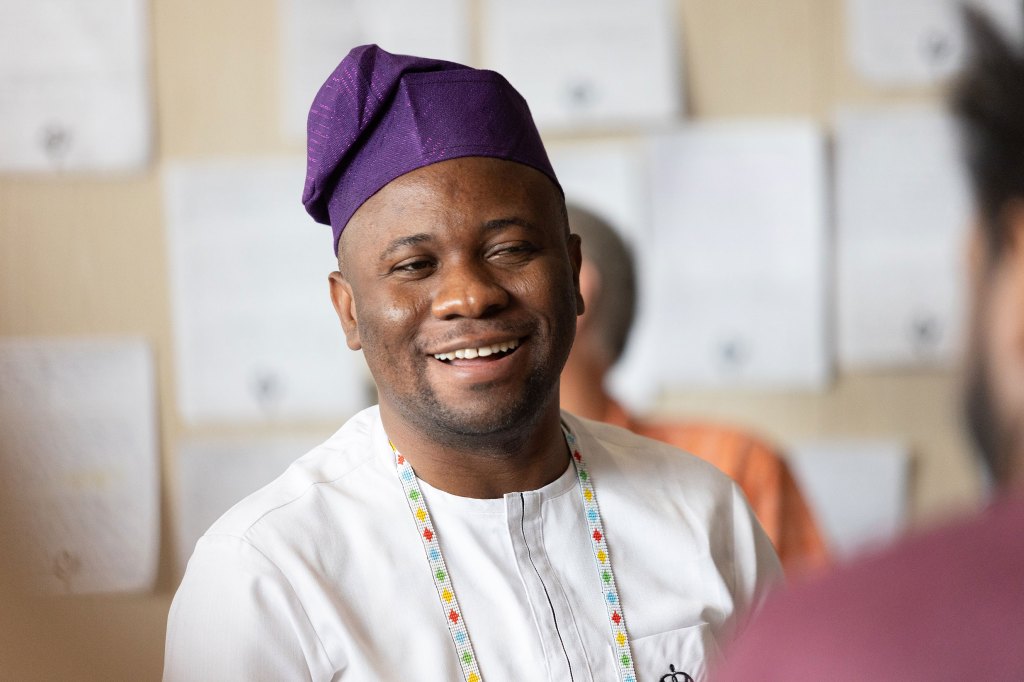
At 17 years old, Rasak Adekoya was already building a career in Nigerian broadcasting, presenting live programs, reviewing newspapers alongside veteran journalists, and learning how stories shape public opinion. Outside the studio, he was studying for a degree in accountancy, with the ambition of combining business with journalism. Then, as he neared graduation, Adekoya began losing his sight.
“Probably, if the health system was better, I would have kept my vision. But so be it. It happened,” he recalled.
See how leaders worldwide are connecting local solutions
From grassroots organizing to global policy change, People-Powered Solutions highlights efforts to protect community voices and agency across the world.
The doors began to close. His university refused to graduate him. “Sorry. We don’t have what it takes to make a blind person become an accountant,” he remembered them saying. When he turned to the media houses that once welcomed him, they gave a similar response: “We know you, but we don’t have the facilities to support you.” Adekoya wanted to fight these barriers, but at the time, Nigeria had no enforceable disability rights law.
He locked himself away and began writing what would become his first book, Brand Your Blindness. In its opening pages, he captured the depth of his despair:
“I knocked on doors and no one opened, I struck at walls and I couldn’t break through… My most beautiful idea reeked of an archaic perfume and I, even I, was thrown off the demand shelf!”
But Adekoya began again. After a year in rehabilitation learning to navigate life without his sight, he restarted university from the first year and completed his studies. He connected with disability rights advocates campaigning for legal reform and supported the final push for Nigeria’s Discrimination Against Persons with Disabilities (Prohibition) Act, which outlawed disability-based discrimination and was signed into law in 2019. He later contributed to efforts to make elections more accessible, helping draft inclusive electoral policy, advocating for braille ballot templates for blind voters, and ensuring more accessible polling environments.
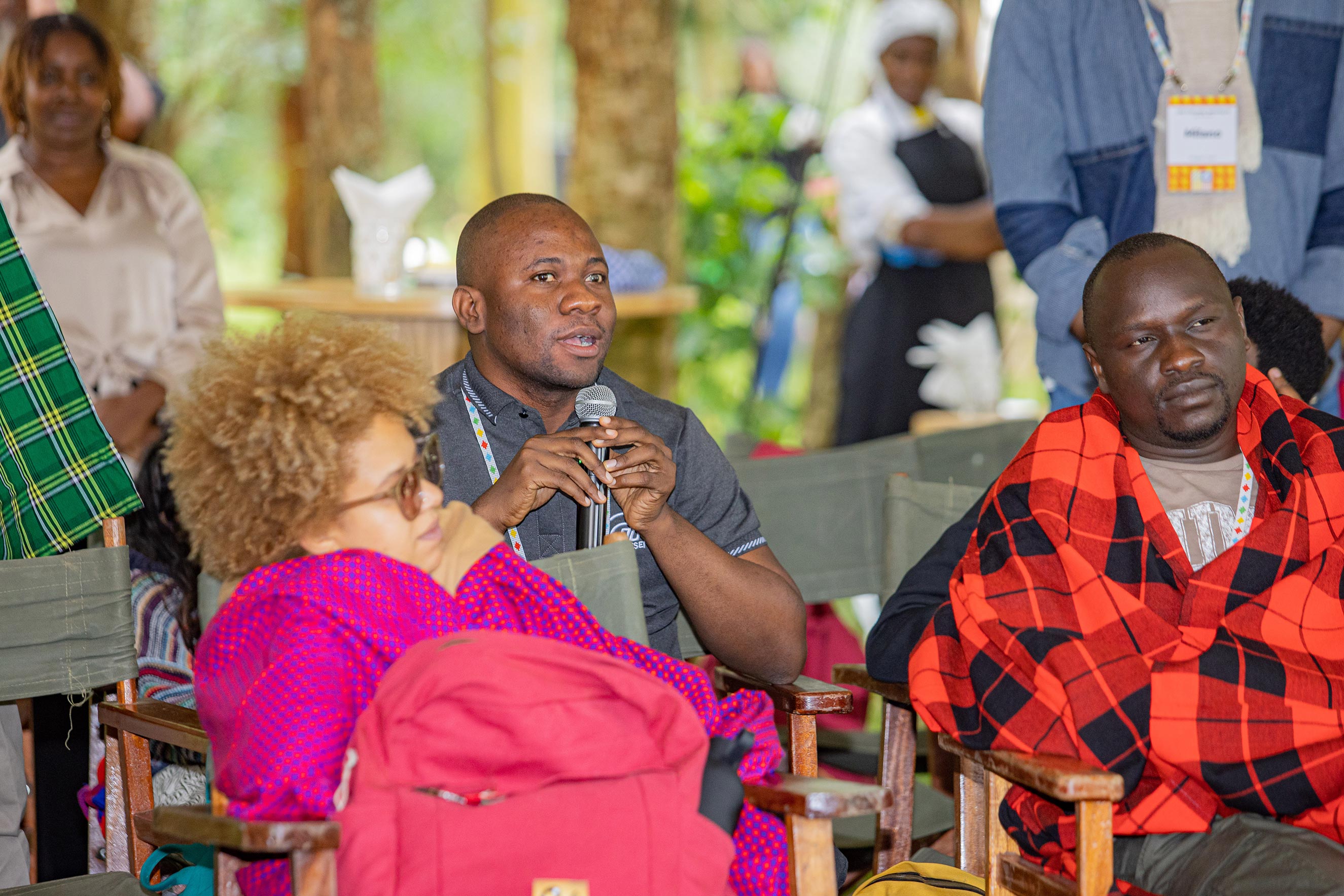
Selected as a Ford Global Fellow for his leadership in disability rights, Adekoya joined a global community of leaders tackling inequality across different contexts. The fellowship encourages leaders to use the questions emerging from their work as a personal compass challenging the very structures of inequality. For him, that has meant looking beyond individual interventions towards the systems, partnerships, and coalitions that can create lasting change.
“Impairment will always happen,” Adekoya said. “One could be born with it, or acquire it later in life. But it is impairment plus barriers that equals disability.” Those barriers take many forms, from discriminatory institutions to inaccessible technologies. The greatest, he argues, is attitudinal: the beliefs that equate impairment with inability.
Adekoya came to realize that accessibility begins with livelihood. Especially in contexts where social protection is weak, economic independence is the foundation from which people can claim their dignity and rights. “There’s a mindset that once you have a disability, you’re not credit-worthy. It’s a myth,” he said. “We need to dismantle those myths.” Economic inclusion became the central focus of his advocacy.
When Adekoya surveyed companies about their hiring, many said they were not refusing to employ people with disabilities but simply did not know how to go about it. He then set about building their “disability confidence”: auditing workplaces, training staff, and helping employers build inclusion into their policies and practices. He incubated Nigeria’s National Business and Disability Network for employers to share practical approaches to disability inclusion and learn from one another—a model he later helped replicate across several African countries.
Under his guidance, MTN Nigeria, the country’s largest telecommunications company, grew its proportion of employees with disabilities from around 0.2% of the workforce to approximately 4%. Disability inclusion expanded beyond hiring into procurement, opening opportunities for entrepreneurs with disabilities to bid for contracts and become suppliers.
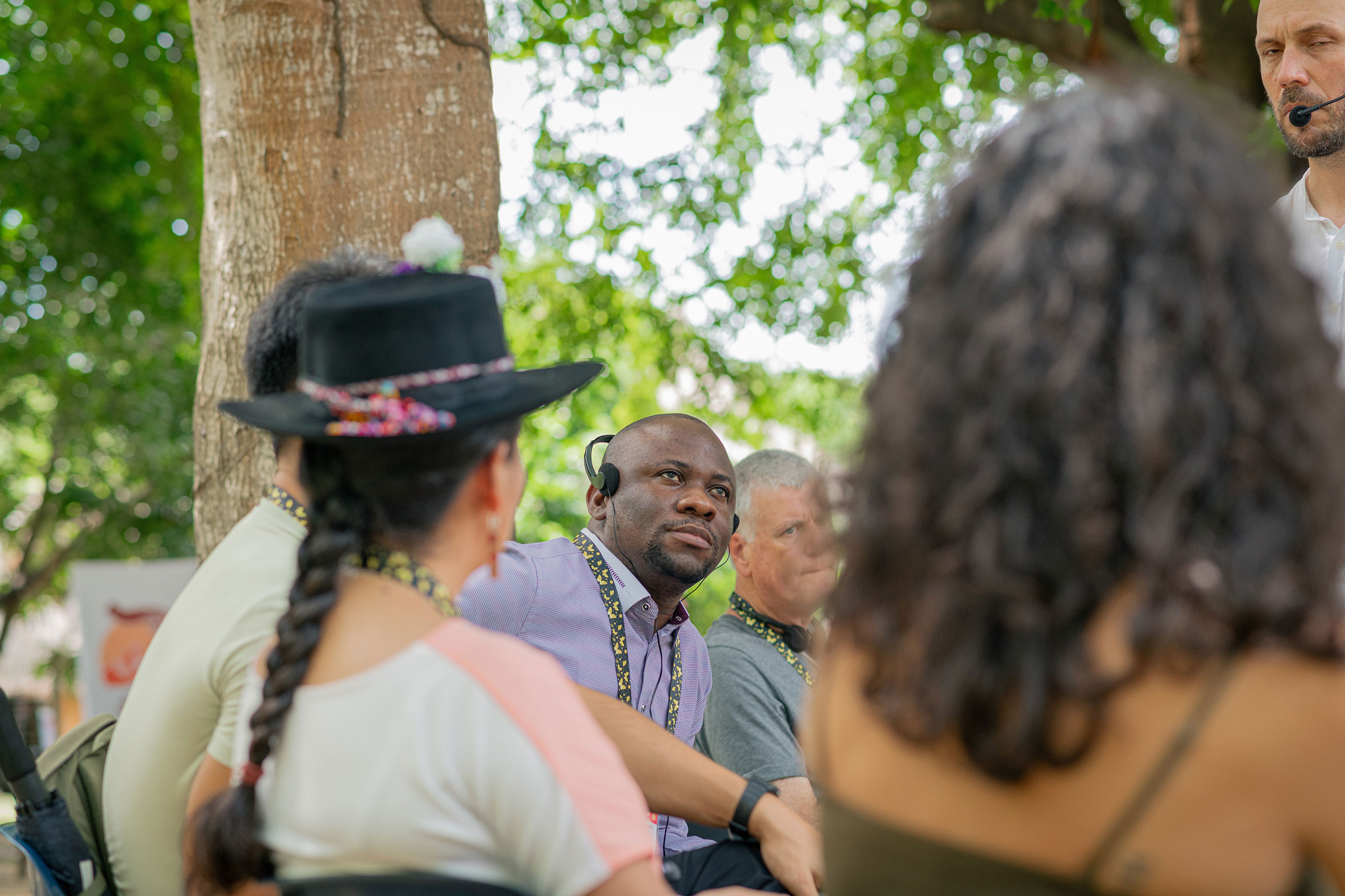
“Every time a young person calls me and says, ‘Today I found a job,’ it gives me hope,” he said. “It means one family has economic freedom. It means that young person is changing minds by showing that people with disabilities can be productive. It means they can build an independent life and, if they choose, a family of their own.”
In international policy spaces, working alongside organizations including the International Labor Organization and the World Trade Organization, Adekoya translates lived experience into policy, using stories to show what disability statistics mean for individual lives. He has applied that approach to advocate for greater access to assistive technology, arguing that the African Continental Free Trade Area could support local production, making assistive devices more affordable and accessible across the continent.
Looking to the future as a Ford Global Fellow, Adekoya is pursuing a new question as a personal compass: How might African philanthropy work alongside global partners to dismantle the barriers that still exclude millions of people with disabilities across the continent?
“Impairment will always be here,” he reflected. “What we can change are the barriers to accessibility.”