
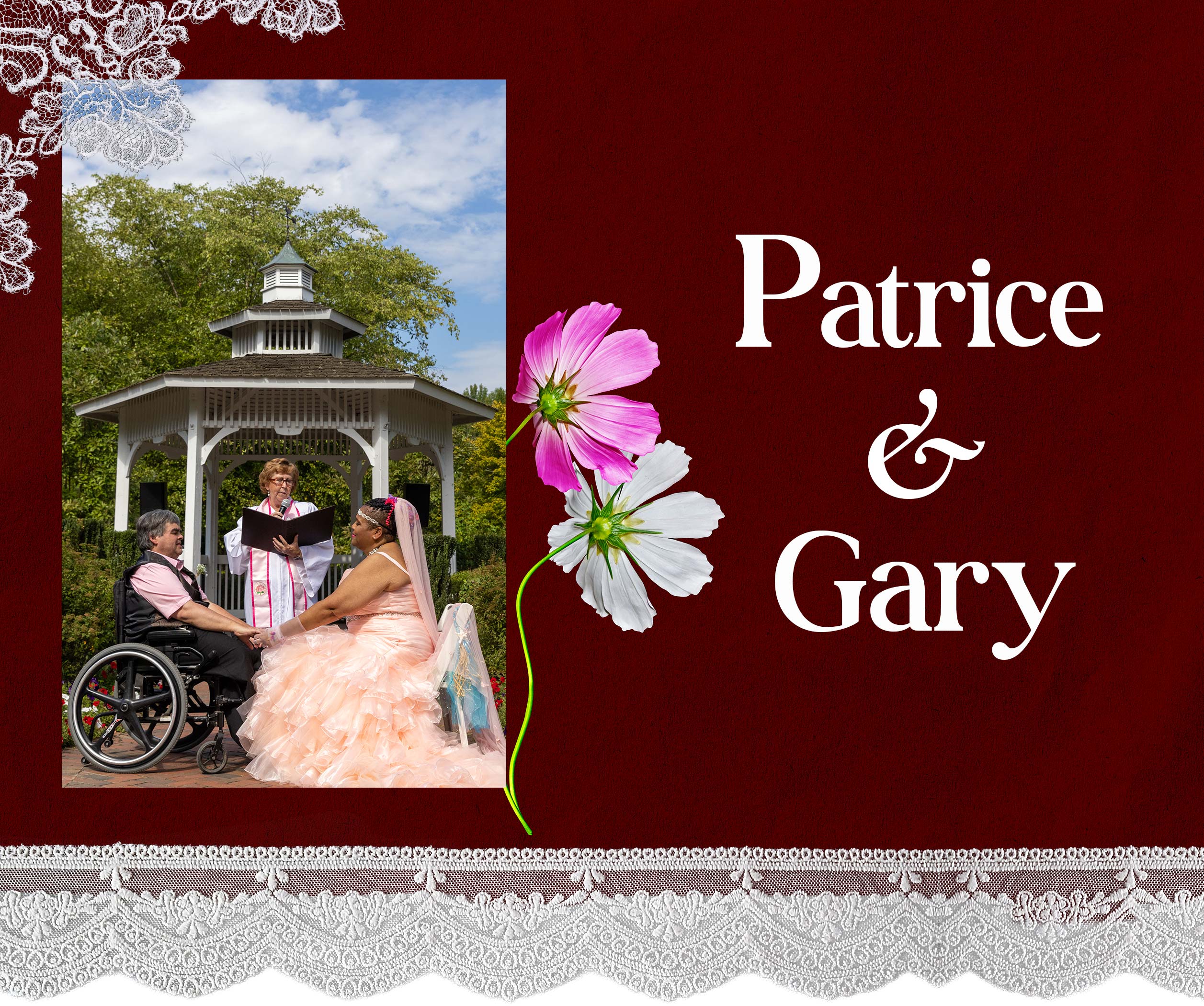
When Patrice Jetter and Garry Wickham became engaged, the first decisions were of small, giddy consequence: where to hold the ceremony, who to invite, what to wear. But soon enough, a far weightier question eclipsed them all: whether they could afford to marry at all. They learned that, as people with disabilities who receive Supplemental Security Income (SSI) and Medicaid coverage from the American government, their benefits will likely be cut if they wed, or even moved in together.

“People with disabilities need their benefits for survival, and there’s no reason that a person with a disability shouldn’t be able to get legally married and keep them,” said Jetter. “Then, as people with disabilities, we could take care of each other. We would be able to be there with our partners, not have to be by ourselves all the time.”
Ultimately, devastatingly, Jetter and Wickham decided they could not afford to wed. Their story, and the emotional toll the “marriage penalty” takes on people across the country, are at the heart of Patrice: The Movie, a 2024 documentary directed by Ted Passon and supported by Ford’s JustFilms initiative. In it, the couple exchanges promise rings instead of wedding bands at a commitment ceremony, surrounded by friends and family. But later, as Wickham says of the SSI system, fighting back tears, “They punish you for feeling feelings that everyone else feels.”
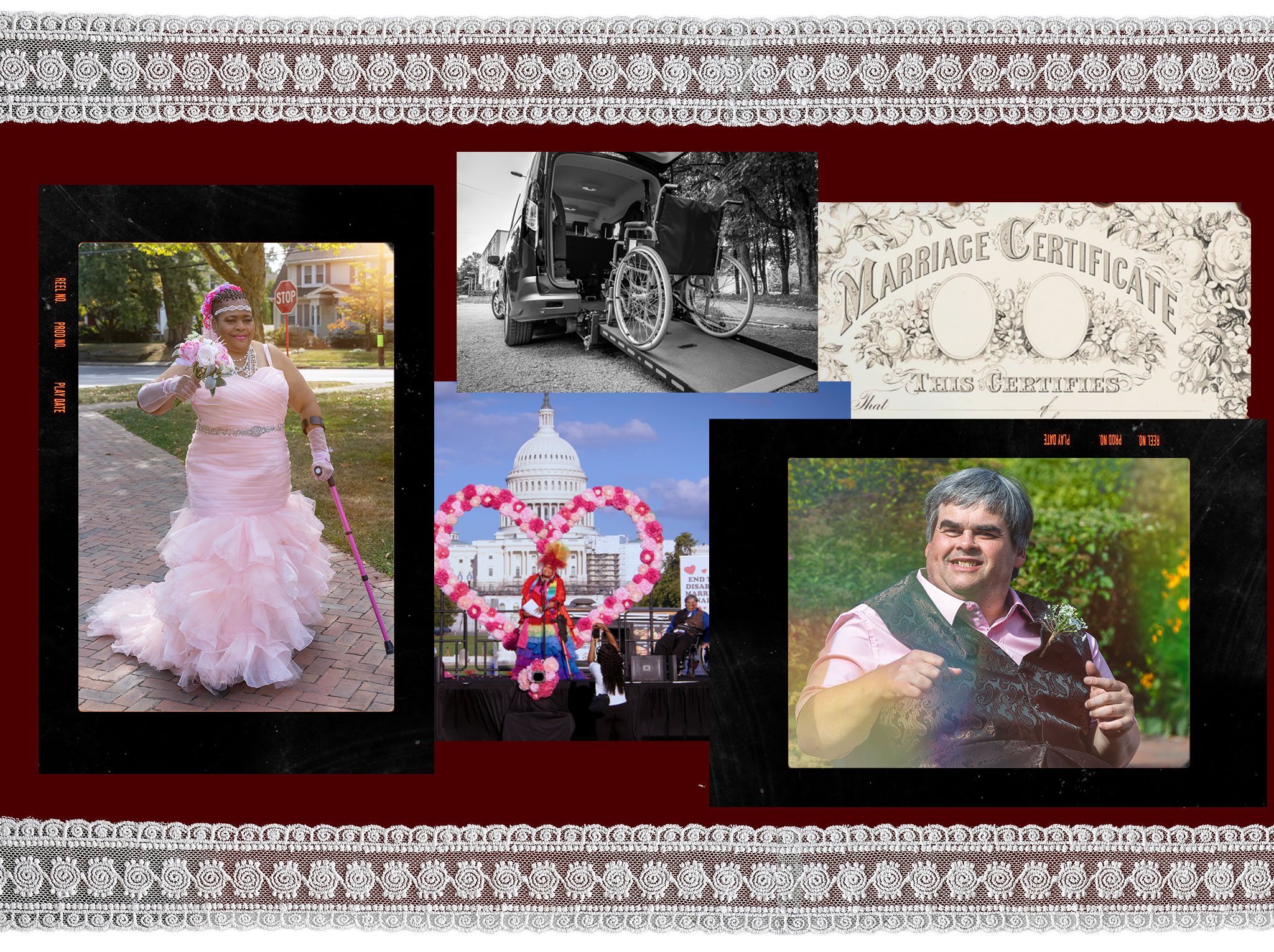
But this obstacle also galvanizes the charismatic and loving couple to action; in the documentary, we see them organize demonstrations and build advocacy for marriage equality in the disability community, including a moving mass-wedding performance art installation in Washington, D.C. that drew dozens of couples and raised awareness for the marriage injustice issue. This work has become their calling: They continue to advocate for policies that remove the “marriage penalty” and extend crucial SSI and medical coverage for all people with disabilities, regardless of marital or cohabitation status, and raise the asset limit to at least $10,000.
From the first frame to last, the documentary reveals Jetter to be a captivating presence onscreen—funny, frank, and energetic, with an array of creative passions from figure skating to fashion design and a streak of no-nonsense idealism that makes her a natural community leader. She’s also unsparing in discussing her difficult childhood with an undiagnosed disability, which included bullying from classmates and time in a youth corrections facility ill-equipped to understand her needs. She and Garry make up a loving family. They hold hands, they talk about their household budget; he loves the New York Giants, she loves her model train set. They argue about the same thing that all families argue about, but their love is strong and evident.
“It’s simple: People with disabilities are out in the community. We work jobs; our neighbors know us,” Jetter says. “We just might have four-wheel drive, wear a brace, wear glasses, carry a cane, or have a service dog, but we’re just like anybody else.”
Patrice: The Movie does not shy away from the frustrations of Jetter’s experience navigating the disability benefits system, including a provision that can strip recipients of SSI if they turn to crowdfunding platforms like GoFundMe for help—resources many disabled people rely on for basic living expenses. The film captures this tension when Jetter must crowdfund to purchase a new accessible van to get to work, a moment that is both heartwarming when her loving community rallies around her campaign and heartbreaking because she feels humiliated by needing to ask for this help.
Patrice: The Movie was celebrated upon its release, winning an Emmy for Exceptional Merit in Documentary Filmmaking and earning recognition at the Toronto International Film Festival, BFI London Film Festival, and the Film Independent Spirit Awards. Jetter walked red carpets and appeared on Last Week Tonight With John Oliver. She attributes the film’s reach not to her own magnetism, but to a shared injustice that resonates far beyond her own experience.
“I really didn’t think the movie was going to become as big as it did. I thought it was going to be one of those afterschool specials,” Jetter said. “But there are so many people with disabilities who are going through the same thing and might want to get married, too. Then they realize all these loopholes that make it hard to do so. We didn’t know about them before we got engaged.”
Jetter and Wickham are still not married, nor living together; they still hope to turn their promise rings into wedding bands one day. Their fight for marriage equality, for everyone in the disability community, has only grown stronger: On social media, they remain vigorous defenders of ending SSI loopholes, often posting Patrice’s advocacy efforts with other disability community leaders and her interactions with supportive policy leaders.
“It gets frustrating sometimes, but we have to keep fighting,” said Wickham. “We have to keep trying so that we can make these changes for—if not our generation, then the next generation of people with disabilities, so they don’t have to go through this, too.”
Jetter agreed. “With everything going on, I have to hold onto hope and keep fighting. It’s a long, uphill battle, but when life throws disabled people a hurdle, we build a bigger ramp.”