The Ford Foundation’s relationship with Brazil spans more than six decades, tracing back to the opening of our Rio de Janeiro office in 1962. Over the years, our partnership has evolved alongside the country itself. Since Brazil’s return to democracy in the late 1980s, our focus has been squarely on defending fundamental human rights, confronting systemic racism, and addressing deep economic disparities.

Thank you to our regional director, Átila Roque, our wonderful Brazil team, and the visionary partners we support for such a memorable visit.
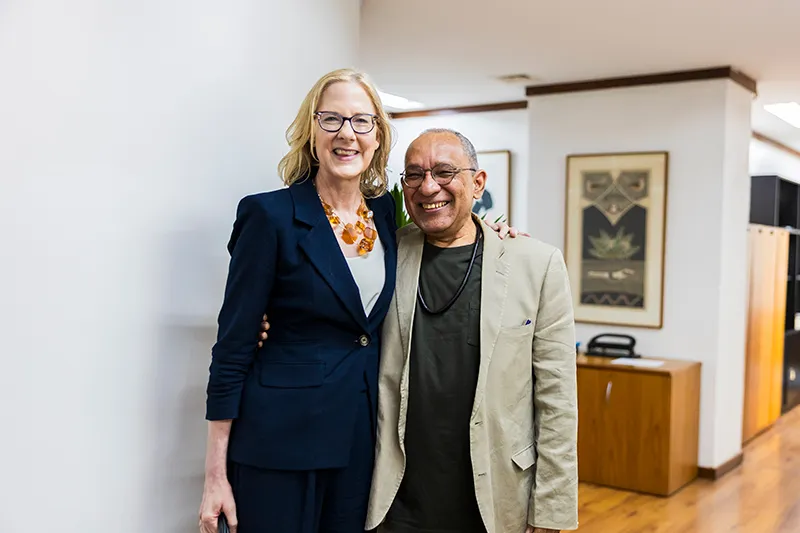
Heather Gerken poses with Átila Roque. Heather smiles wearing glasses, a blue blazer, and an amber necklace. Átila is wearing a beige blazer, glasses, and a black beaded necklace. The setting is professional.
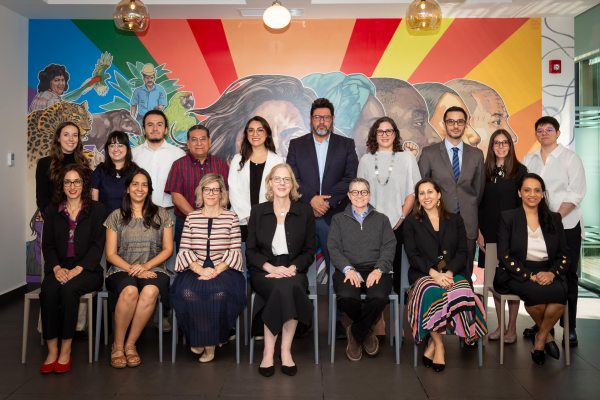
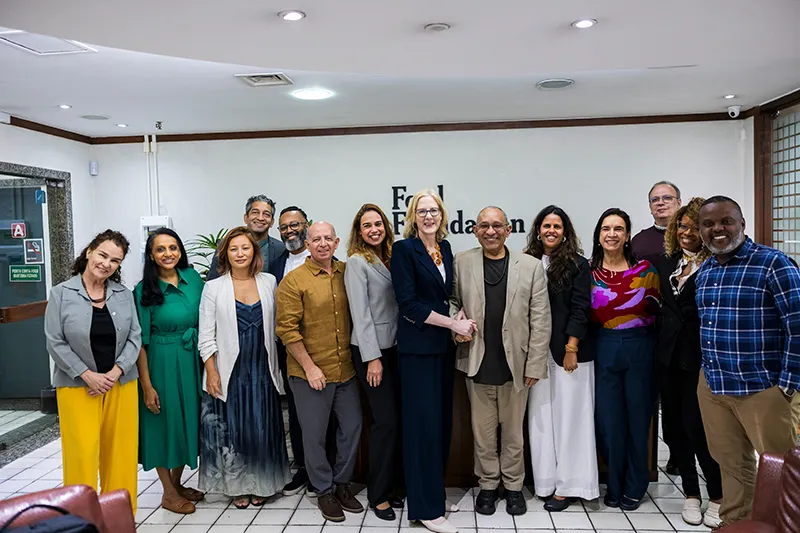
Staff pose for a group photo with Heather and Átila in the front and center. Individuals are pictured with big smiles in front of a sign that says “Ford Foundation,” wearing a variety of professional-looking, colorful outfits.
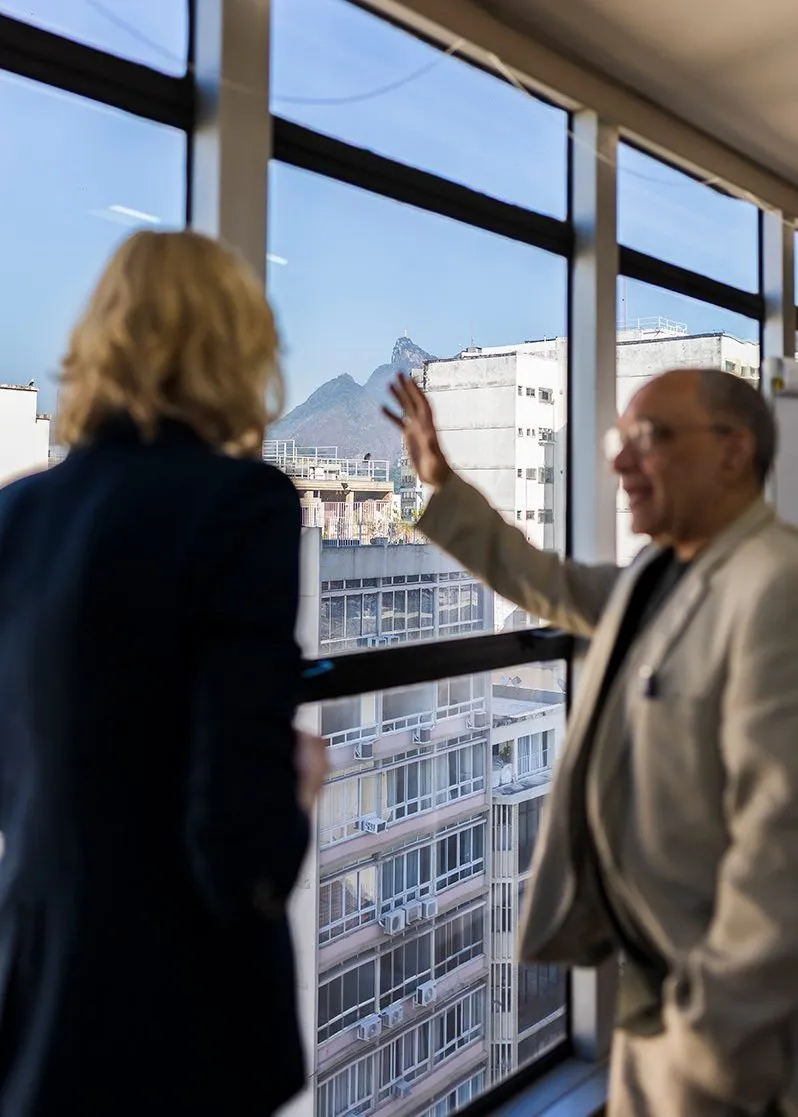
Heather and Átila stand in front of a window with a view of residential buildings and mountains and blue sky in the background. Átila raises his hand to point outside.
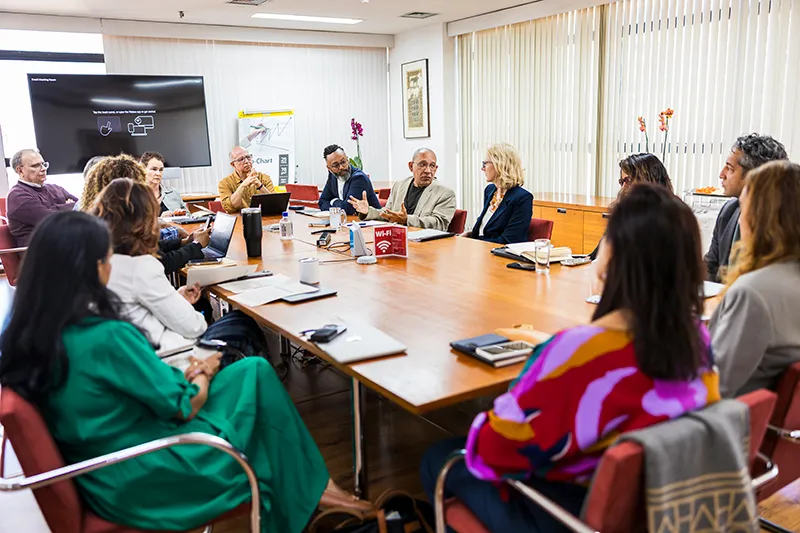
At a Ford staff meeting where individuals are seated together engaged in a discussion. They wear various colorful, professional outfits. The setting is a meeting room with a large wooden table.

Honoring Afro-Brazilian Heritage

I began my trip in Rio de Janeiro. Learning about Afro-Brazilian history at the Museu da História e da Cultura Afro-Brasileira and the Instituto dos Pretos Novos was deeply moving.
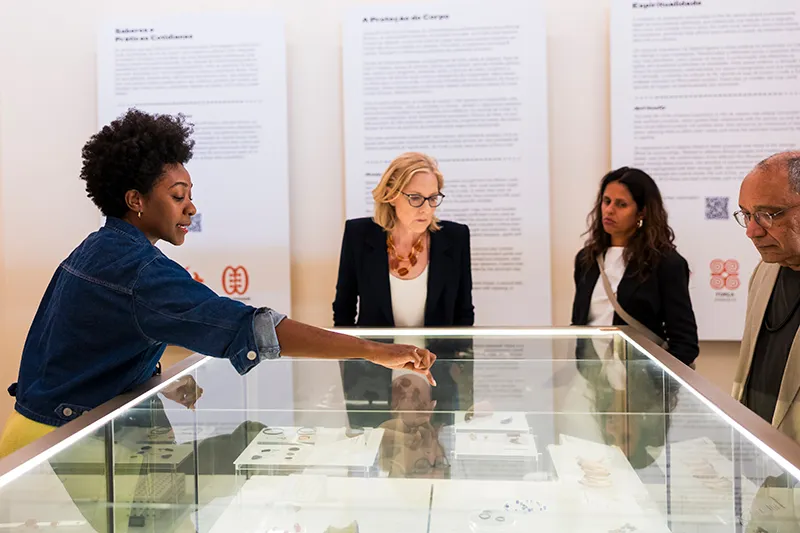
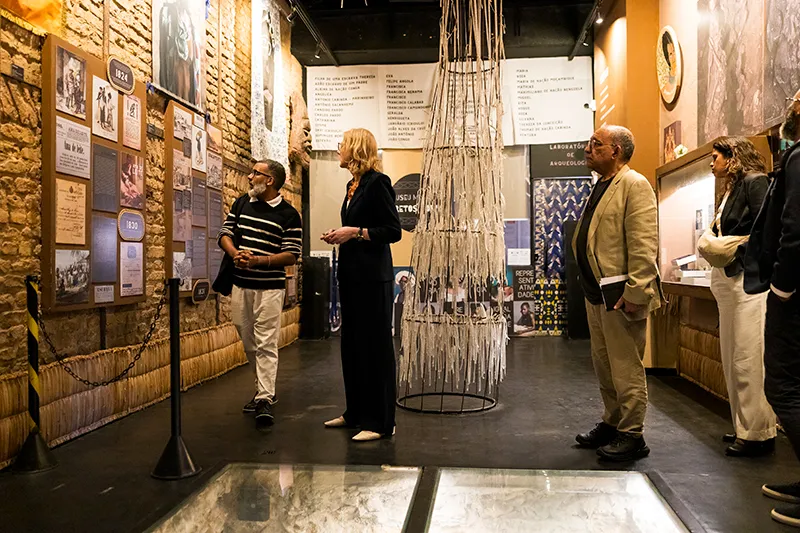
Heather Gerken and Átila Roque are standing with two other individuals in front of a glass exhibition at the Museum of Afro-Brazilian History and Culture. One individual points to an artifact at the center of the exhibition as others look on.
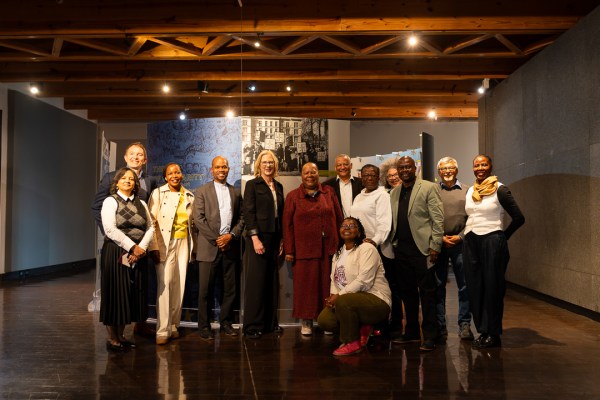
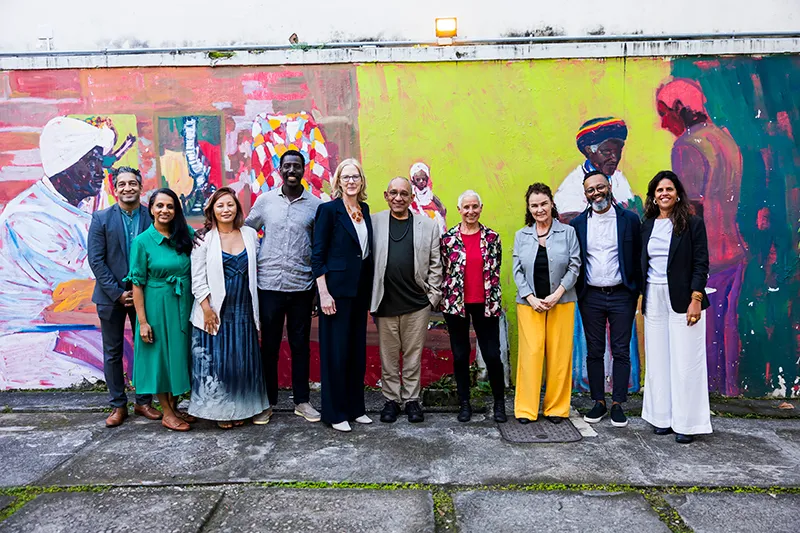
Group photo featuring Heather and Átila alongside other smiling individuals in business casual clothing in front of a mural. The mural depicts several figures with dark skin and head coverings who are standing in front of colorful patterned backgrounds of vibrant yellow, pink, and green.
Heather stands among a group of people observing exhibits at the Instituto Pretos Novos. The room has warm lighting and exhibits on the walls with photographs and text. There is a tall, cylindrical art installation in the center of the room. Exhibits feature historical information and images.
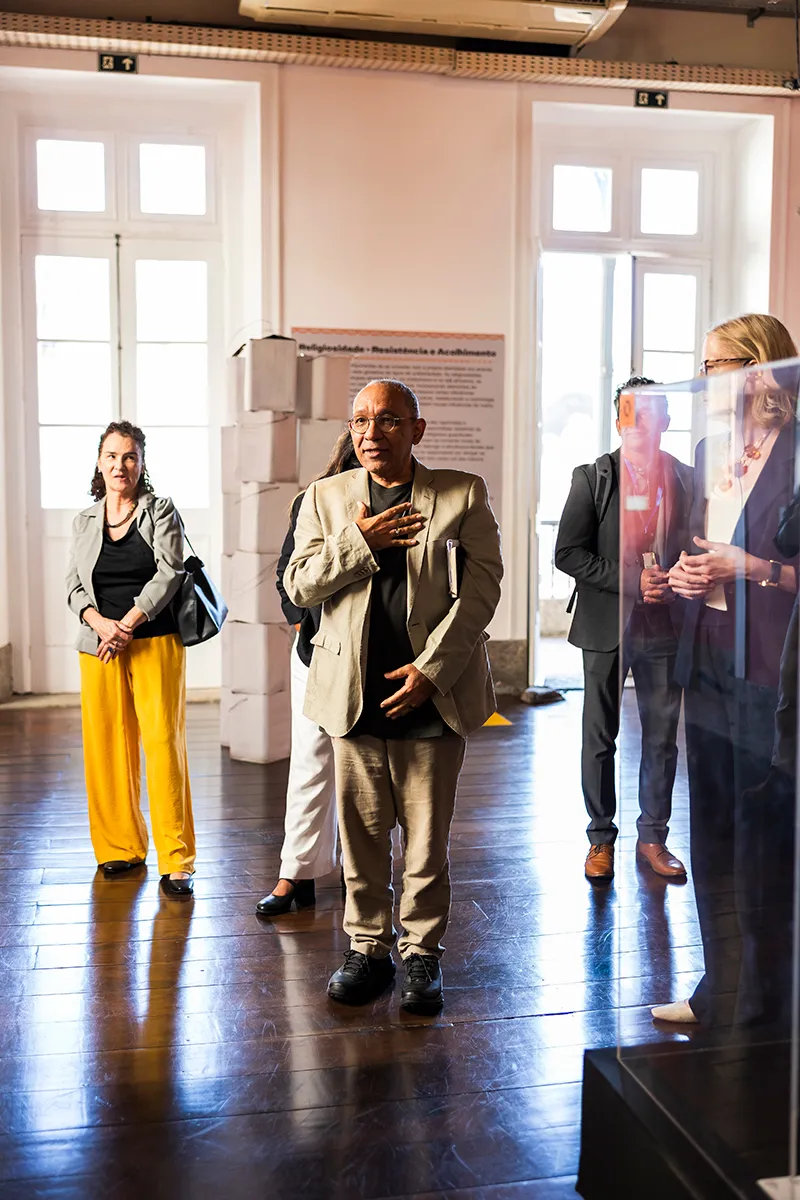
A group of people stand attentively indoors, where Átila is gesturing in conversation. They are in a well-lit room with wooden floors and large windows. Museum display cases and informational panels can be seen in the background.

Brazil is home to the largest Black population outside of Africa, and I was inspired to connect with our partners in Rio who are working every day to safeguard democracy, advance racial and gender justice, and reshape public safety.

Grassroots Leadership in the Favelas

I then spent a day connecting with our partners at Redes da Maré to understand both the structural barriers and the immense promise within Rio’s favelas. Maré is a complex of 17 distinct favelas home to more than 140,000 residents.
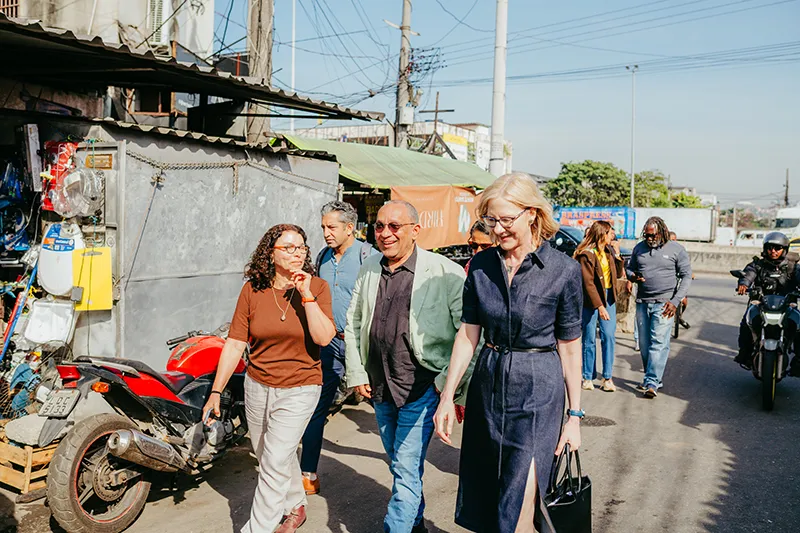
Heather and two other people walking and chatting along a sunny urban street lined with local shops and a motorcycle.
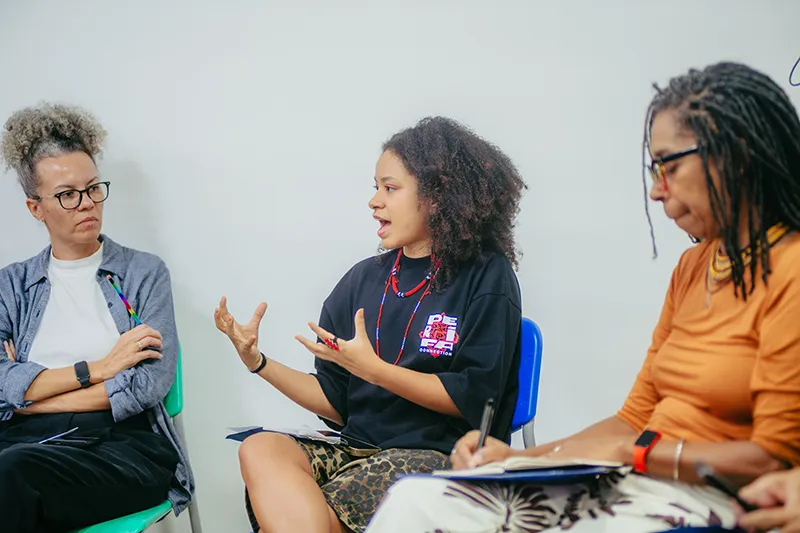
Three individuals engage in a discussion while seated in chairs. They each hold notebooks, and one is speaking with expressive hand gestures. The group appears focused and attentive.
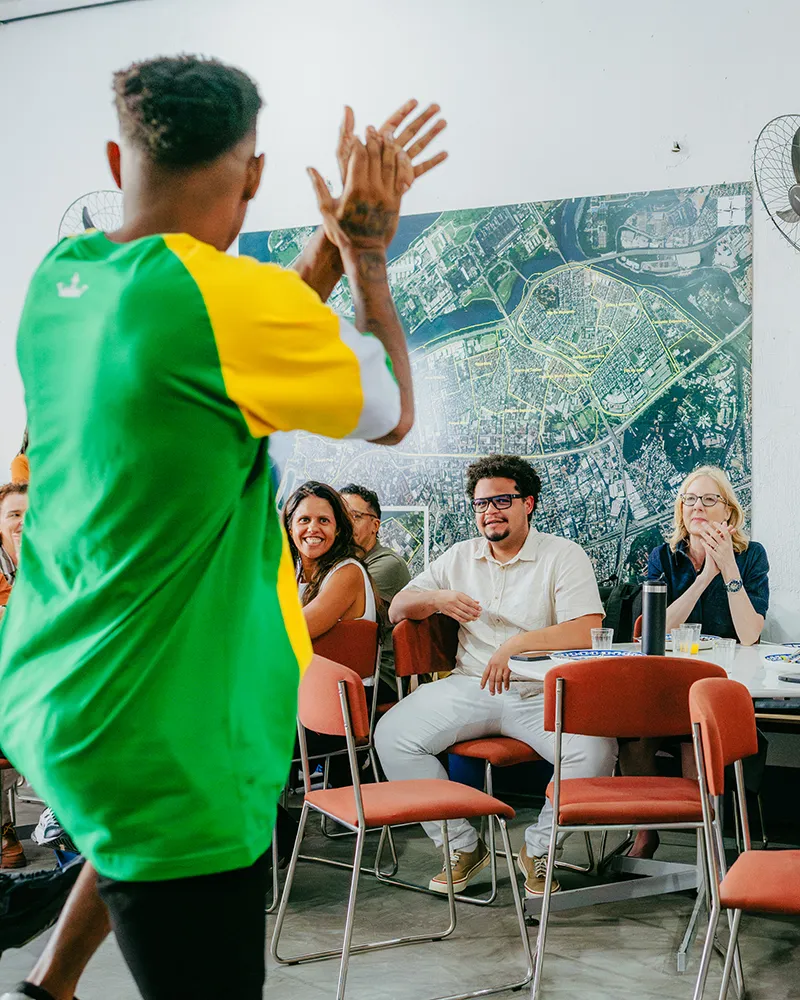
A man in a green and yellow shirt claps in the foreground. Sitting in the background, Heather Gerken and others watch and smile in front of a large map.
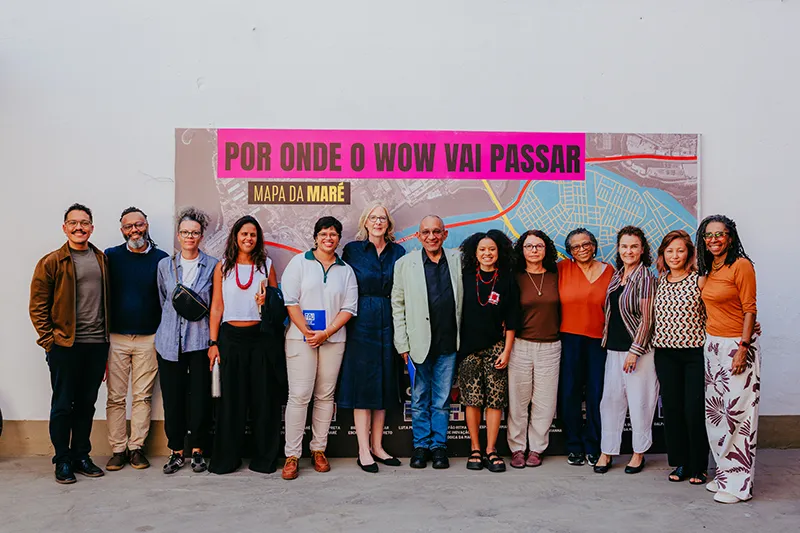
Heather stands at the center of a group of people in front of a large map labeled "Mapa da Maré" and "Por Onde o Wow Vai Passar" in pink. They are arranged in a line, smiling at the camera. The background is a plain white wall.

We spoke with grassroots organizers, youth leaders, and independent journalists focused on dismantling structural racism and creating community-led safety models within these vast neighborhoods. Their work is proof that the most effective solutions come straight from the community. 

Indigenous Stewardship and Climate Justice

The second half of my visit carried us to São Paulo, where we traveled to the Tenondé Porã village to meet with Guarani Indigenous leaders.  

Home to over 1,100 Guaraní people who are struggling to defend their cultural existence, this territory encompasses nearly 16,000 hectares of precious forest that sits at the edge of São Paulo’s massive urban footprint.
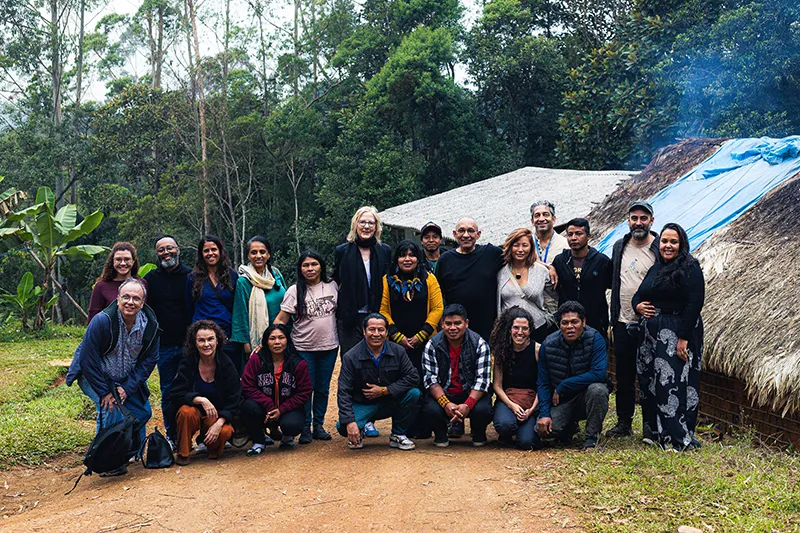
A group of people poses in front of a rustic building with a thatched roof, surrounded by lush greenery.
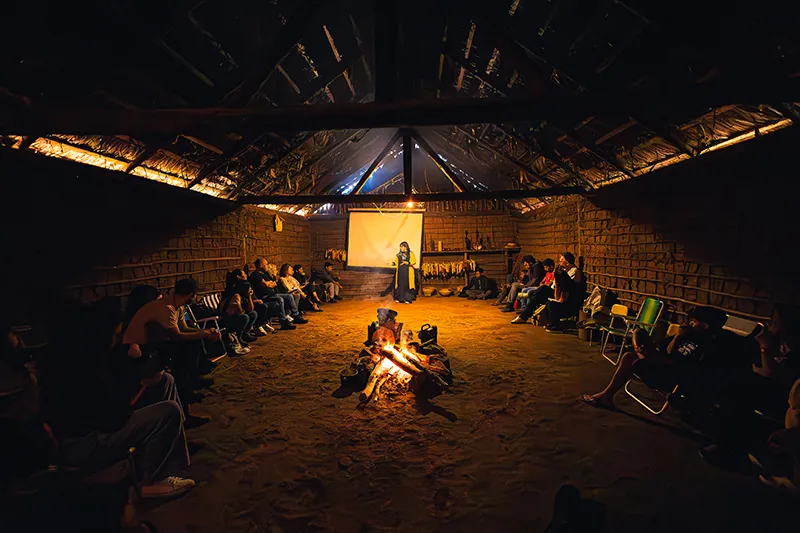
A person stands in front of a screen inside a dimly lit thatched building with a campfire in the center. People are seated in a circle around the fire, attentively watching the screen. The interior has a rustic and communal atmosphere.
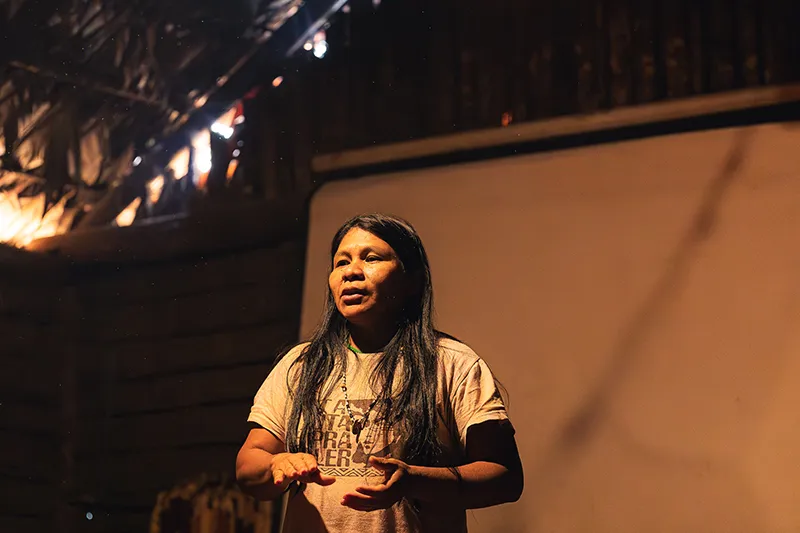
A person stands indoors, speaking passionately. She’s wearing a t-shirt and gesturing with her hands. The setting has wooden walls and dim lighting, suggesting an intimate atmosphere.
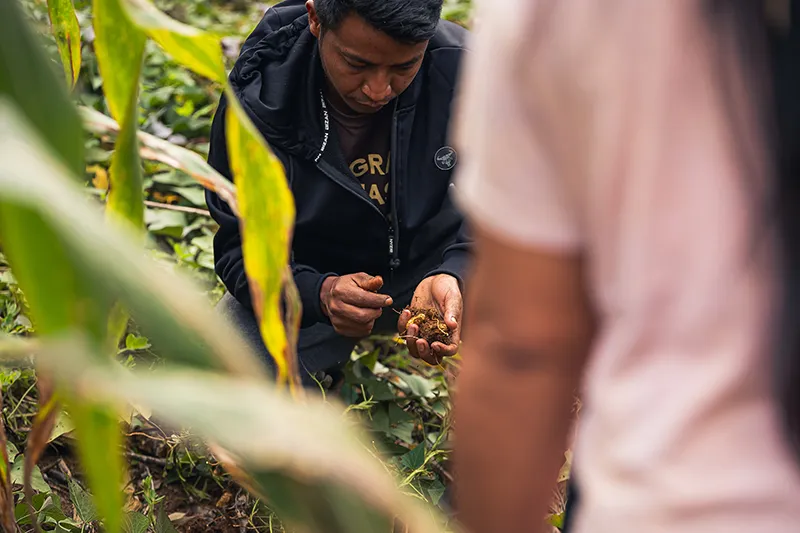
A person crouches in a field, examining plant material including peanuts and roots, with surrounding greenery. Another person stands in the foreground, partially visible. The environment suggests agricultural activity.

I was inspired to learn about their strategies for defending their lands, preserving their heritage, and using traditional knowledge to protect our global ecosystems.

Collaborative Philanthropy

I was also privileged to engage with fellow funders through the Group of Institutes, Foundations and Enterprises (GIFE) in São Paulo. We explored innovative approaches to unlocking social investments and maximizing the impact of philanthropic capital within local communities across Brazil.
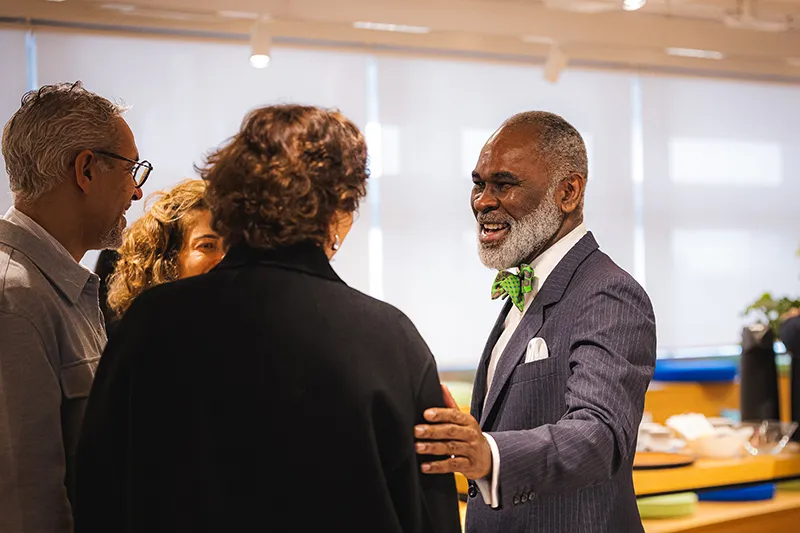
A smiling Black man with a grey beard, wearing a suit and green bow tie, talks warmly to a group of people at an indoor gathering.
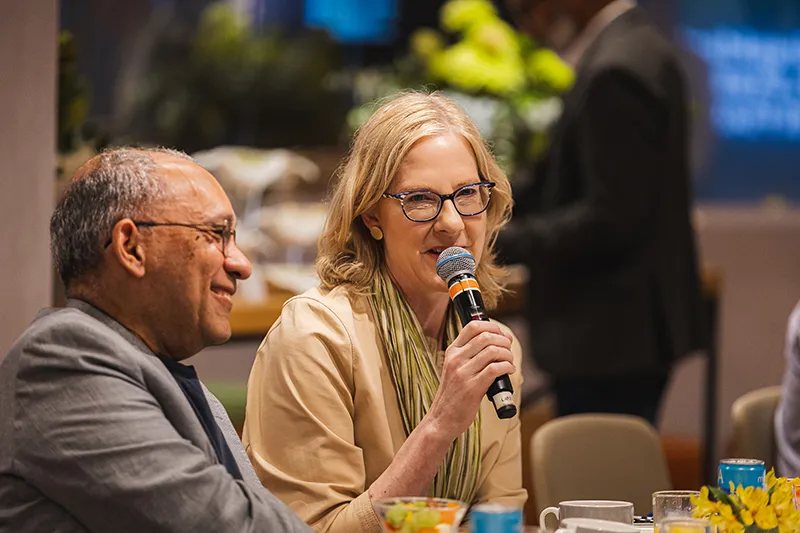
Heather Gerken speaks into a microphone while sitting next to a smiling Átila Roque, in a grey suit, during an indoor event.
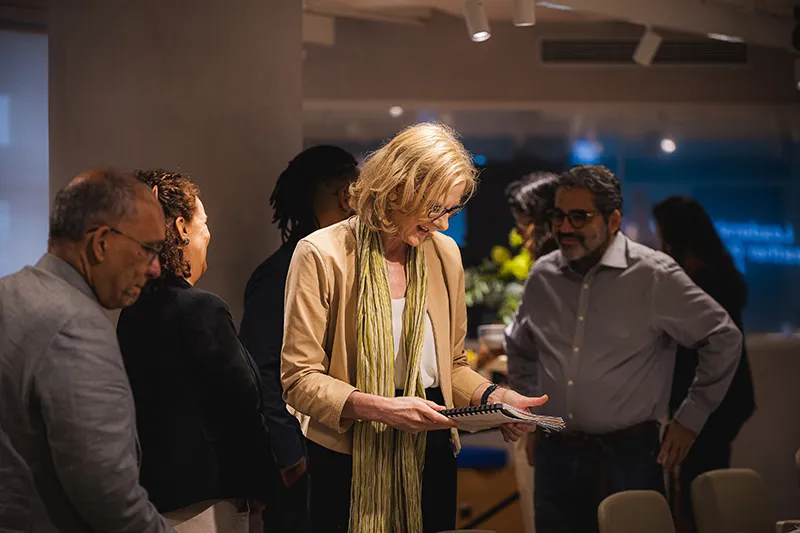
Heather holds a bound booklet and smiles while other individuals look on. She is wearing a tan blazer and green scarf. The setting is in a large room with floral arrangements.
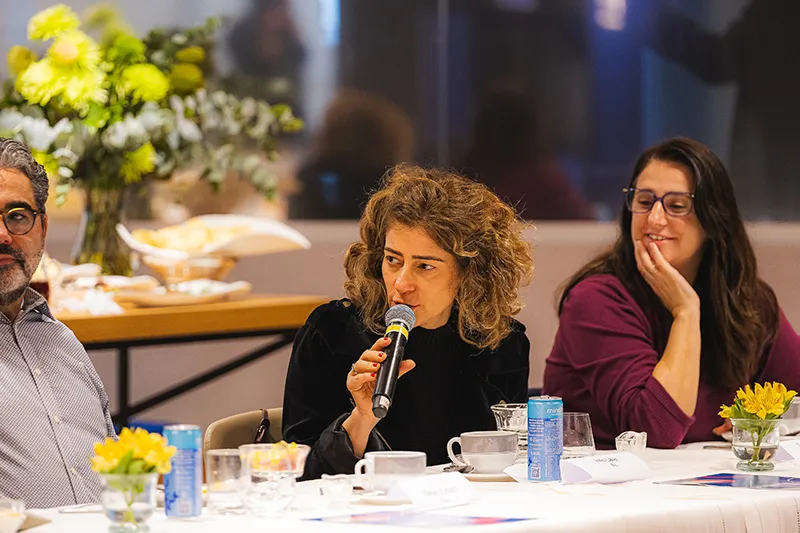
A person speaking into a microphone at a conference table with others seated nearby. There are floral arrangements and beverages on the table.

Formulating an Inclusive Vision for Democracy

While in São Paulo, I also had the honor of attending a roundtable discussion hosted by Conectas. The room brought together some of the country’s most prominent legal minds, anti-racist advocates, and Indigenous rights leaders, including Sueli Carneiro, Ailton Krenak, Cida Bento, Oscar Vilhena, and Adriana Abdenur. Our conversation centered on the collective work required to build a robust, representative democracy that protects the rights of every citizen.
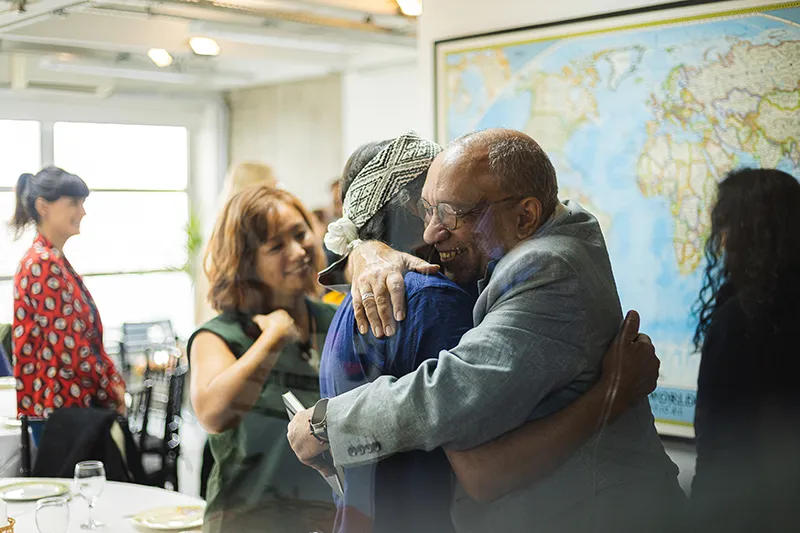
Átila Roque, wearing a grey jacket, smiles warmly as he shares a big hug with someone in front of a world map during a gathering.
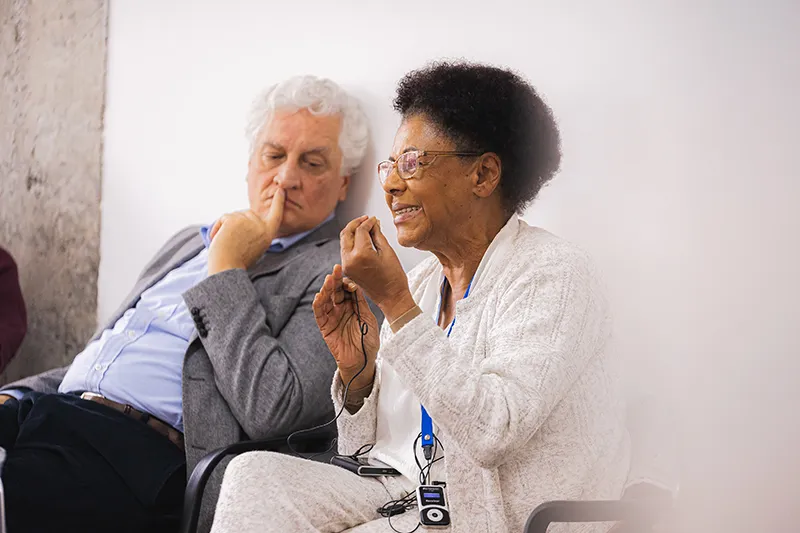
An older Black woman speaks and gestures expressively while a white-haired man in a grey blazer listens thoughtfully beside her at an event.
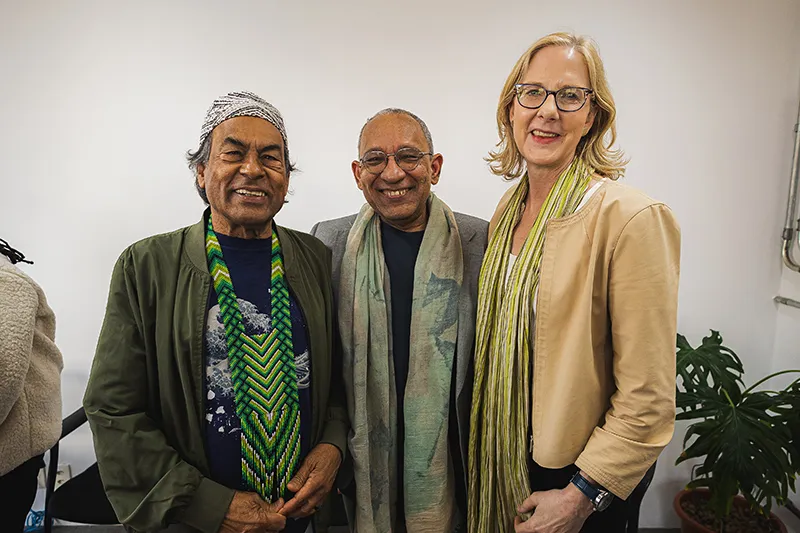
At the Conectas - Brazil and Democracy - Brazil in the world - event, Heather stands with two other individuals, one wearing a traditional beaded garment and one wearing a long green scarf.
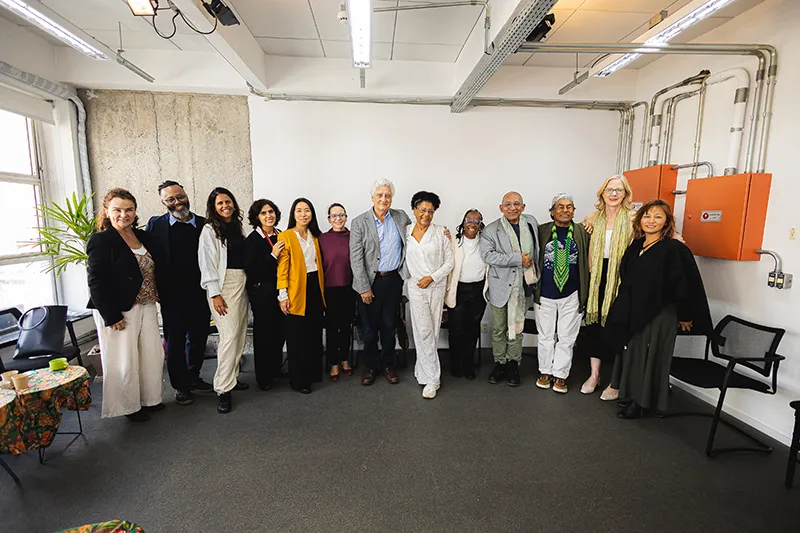
A group of people standing together for a posed group photo in a well-lit room with industrial elements, such as exposed pipes and modern light fixtures. There are various chairs and tables around, and a plant near the window.

Preserving Collective Memory

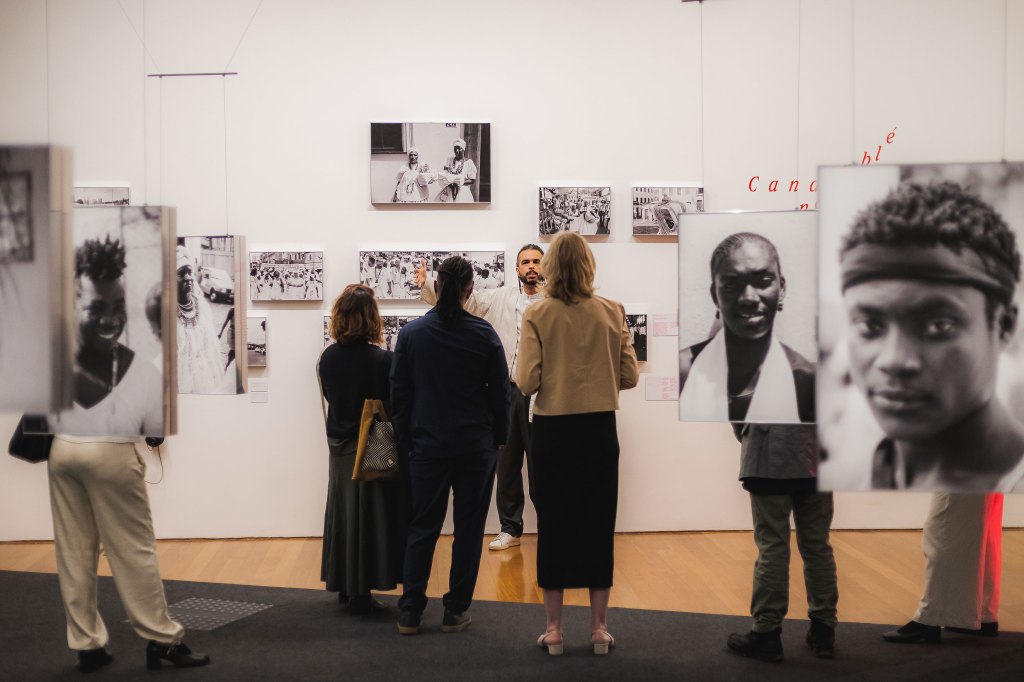
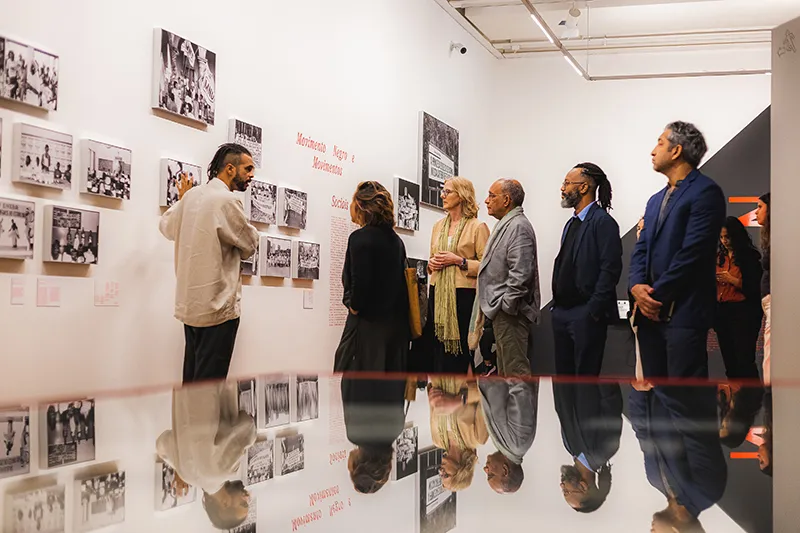
Experiencing the incredible Zumví Afro Photographic Archive alongside curator Helio Menezes was a powerful capstone to the trip. By protecting over 30,000 negatives that document the visual history of Afro-Brazilian culture and empowerment, the archive stands as an important reminder that preserving cultural memory and defending human rights are rooted in the same soil.

Heather stands together with two other people, smiling and talking in a brightly lit room.
A group of people stands in an art gallery at the Zumvi Photography Exhibition, observing black-and-white photographs displayed on the walls. The room is well-lit, with reflections visible on a glossy surface in the foreground.
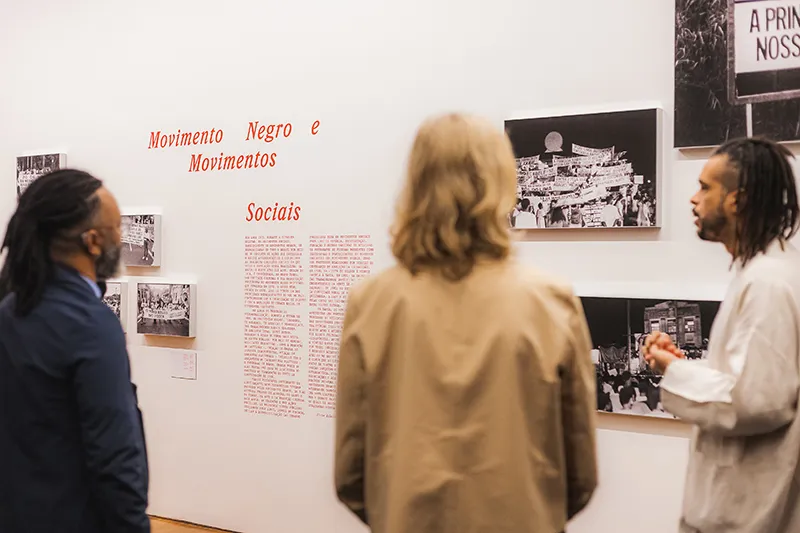
Three individuals are observing the Zumvi Photography Exhibition featuring black-and-white photographs. The text on the wall reads "Movimento Negro e Movimentos Sociais" in red. The setting appears to be a gallery or museum.
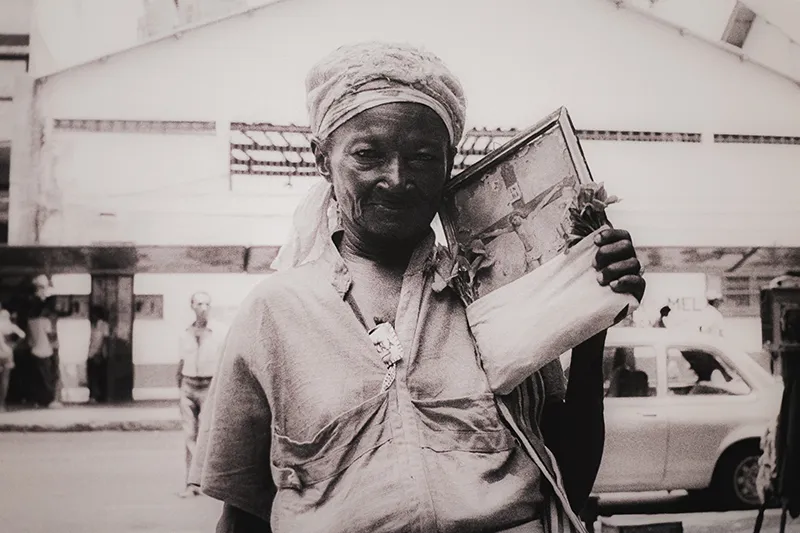
A black-and-white photo from the Zumvi Photography Exhibition. In it a person is seen holding a framed photograph on a street. The background features a building and a partially visible vehicle, possibly a car.