
Immigrant Talent Powers the American Economy
17 AUGUST 2026
Ford Foundation
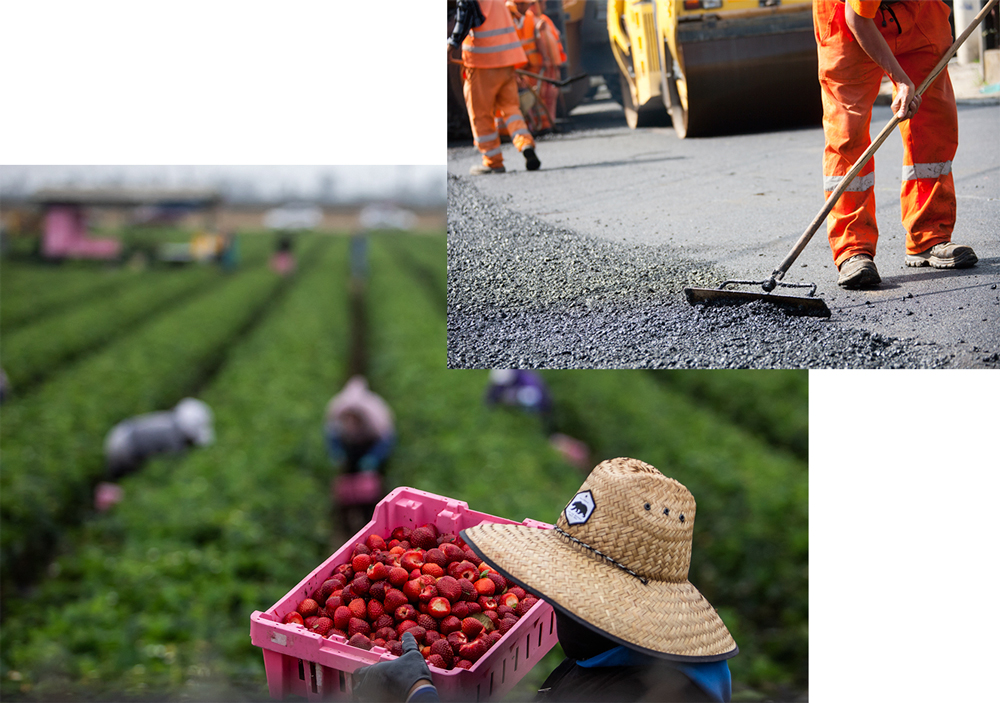
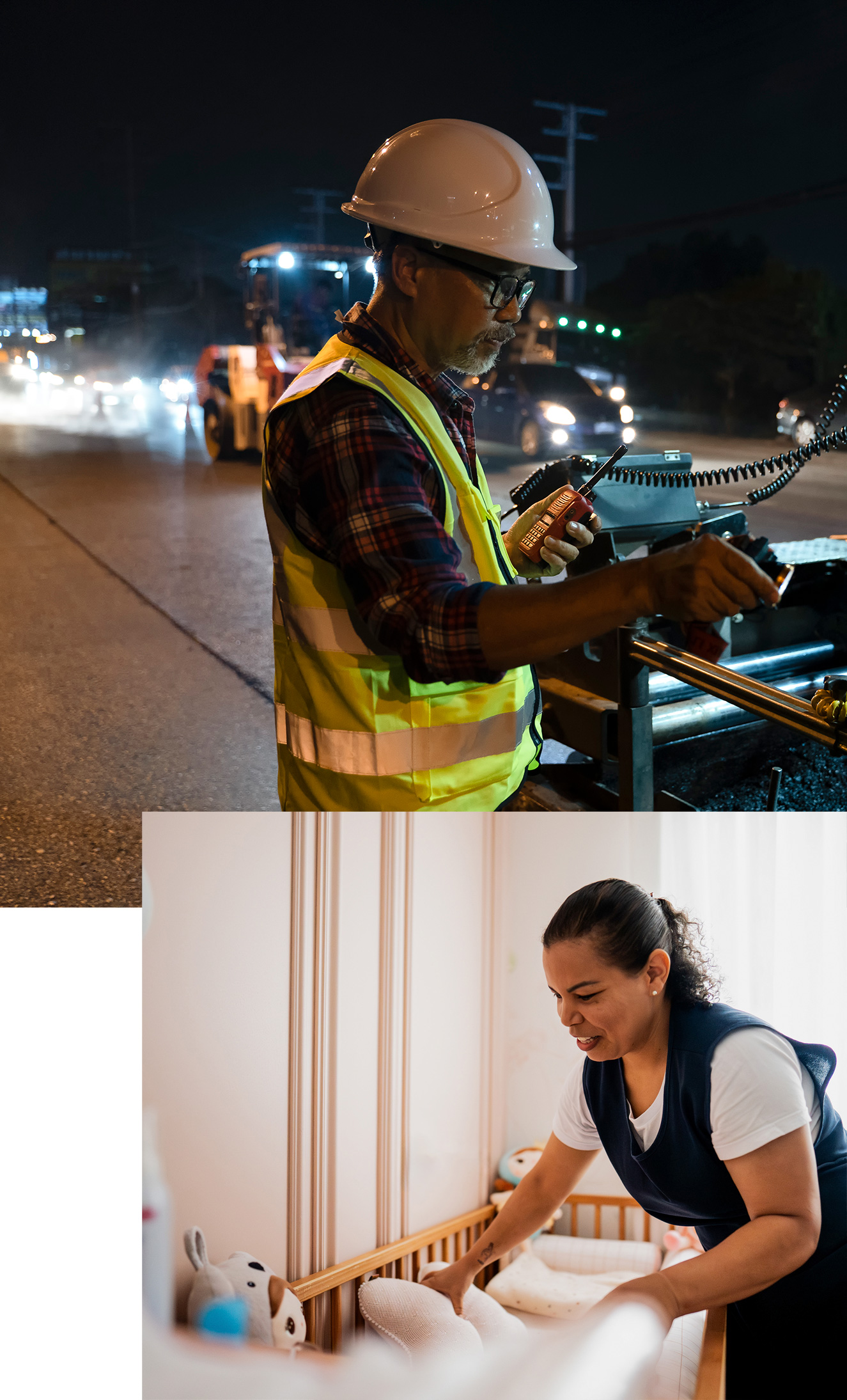
On an average day in the United States, over 30 million immigrants work around the clock to power our economy.
At 1 a.m.,
logistics workers in Kentucky start the night shift at a fulfillment center, packing and loading boxes for morning deliveries.
At 4 a.m.,
farm workers in Iowa walk their cows to the milking parlor to produce dairy that will line grocery store shelves throughout the state.
At 12 p.m.,
a nanny in New Jersey lays a blanket down in a park so the toddler in her care can enjoy lunch while his parents are at work.
At 5 p.m.,
a chef in Minnesota opens the doors of her restaurant, relying on a team of servers, line cooks, runners, and dishwashers to make every guest feel at home.
At 9 p.m.,
an overnight crew in North Texas begins placing traffic cones alongside Highway 75, closing lanes to begin critical maintenance on a route over 200,000 vehicles travel each day.
Immigrants carry out thousands of essential services daily that keep America’s cities running, our families fed, and our loved ones cared for.
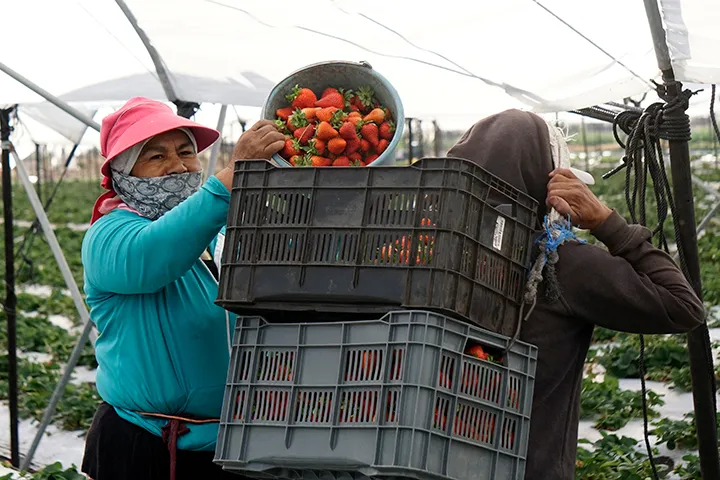
Today, one in six employees in the country is an immigrant, and their participation is even more pronounced in essential sectors like construction and direct care, where they represent nearly 30% of the workforce. In the agricultural sector, that number leaps to 68%.

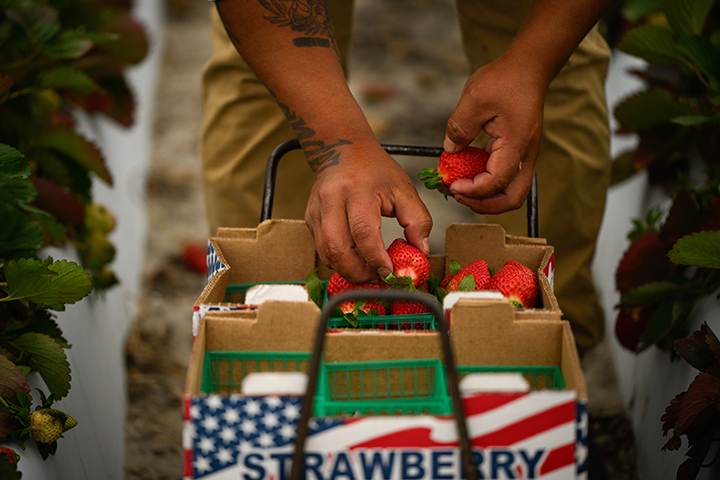
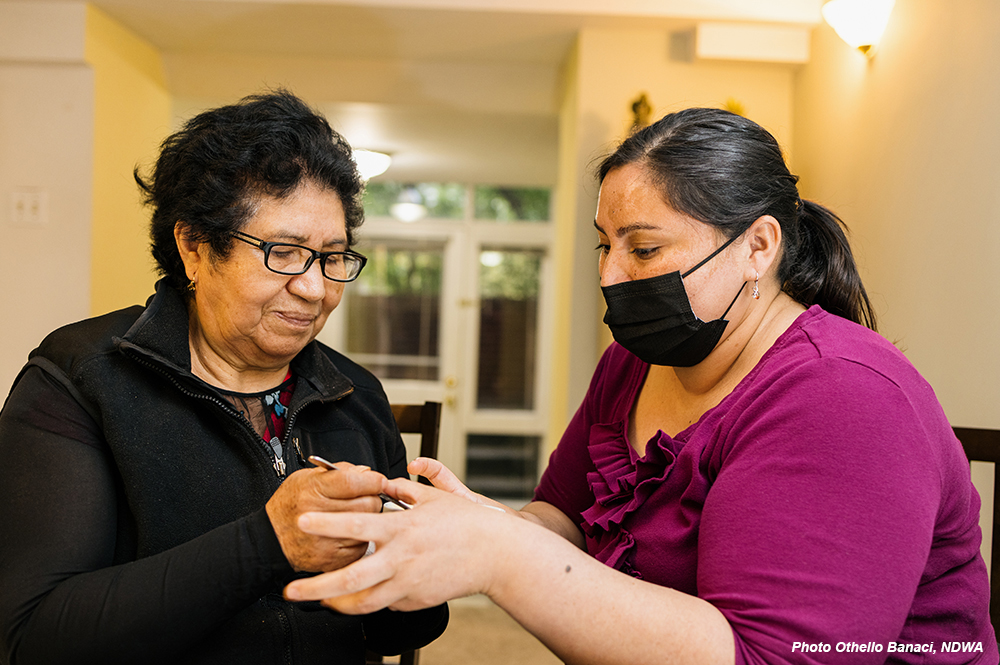
These figures reflect more than just their labor participation. They demonstrate that the rights of immigrant workers are inseparable from the well-being of our nation as a whole.
Yet, over the last decade, shifting immigration policies have made it harder for immigrants—many of whom have work authorization and are long-term members of our workforce—to contribute their talents to local economies.
Even for those who can secure employment, a job rarely guarantees true security: Many face wage theft, unsafe working conditions, and a lack of protections. This instability fuels anxiety among workers, who often see the risk of retaliation as far too high to advocate for their rights—and the harms extend far beyond the workplace.
Estimates suggest milk prices could double without the immigrant workers who produce 79% of the country’s milk supply. That same labor pool makes up nearly a third of the homebuilding workforce, who are critical for addressing the nation’s 1.5 million-home shortage.
And the need for their skills is only going to grow: By 2030, older adults are expected to outnumber children for the first time in history, requiring 9.3 million care workers to handle the shift. Without immigrant care workers, families may be forced to reduce work hours or leave the workforce altogether to care for aging family members.
An America without immigrant talent is an America with higher grocery prices and closed storefronts. It is a nation with construction delays and families struggling to juggle work and caregiving responsibilities. Perhaps that’s why some of the loudest proponents of long-term, quality employment for immigrant workers are employers themselves.
The Foundation of Our Economy
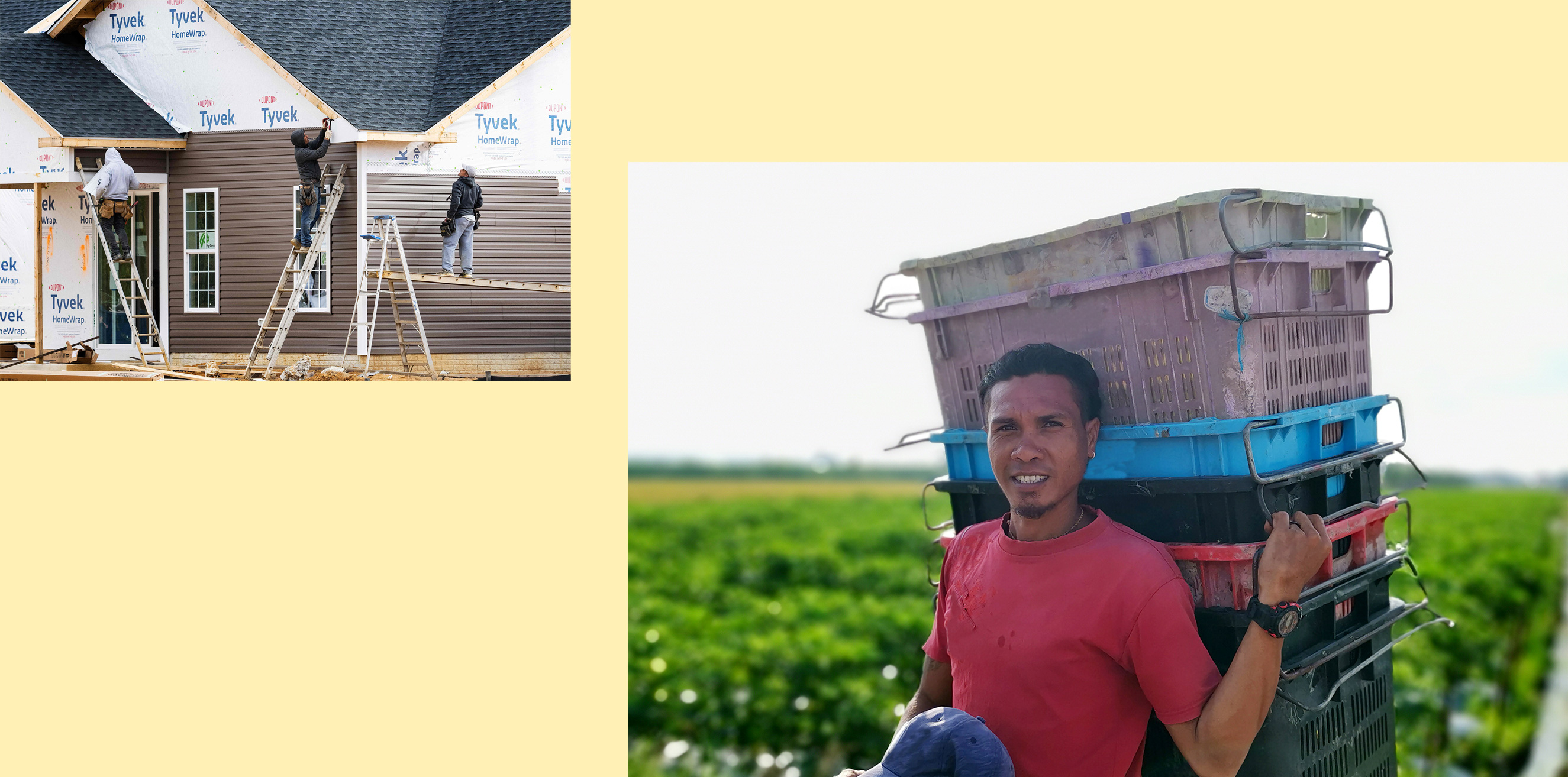
A growing number of business leaders from across the country believe immigrants are a vital part of the solution to meet rapidly rising labor demands across multiple industries, including construction, agriculture, and care.
Over 1,700 employers and CEOs have come together as part of the American Business Immigration Coalition (ABIC), a Ford Foundation grantee, to support legal pathways for a thriving immigrant workforce. Its members include manufacturers, ranchers, nursing home owners, and general contractors across states, all united in the belief that businesses have a responsibility to support immigrant workers.
“It’s not easy waking up at 3 a.m. every day and milking a 1,500-pound animal,” said Rebecca Shi, CEO of ABIC. “It’s not easy to fix shingles on a roof in 110 degree heat with our climate getting hotter year after year. We have found that even when employers post wages that are three times higher than the local minimum wage, there aren’t many American-born workers waiting in line to perform this labor. Those who remain in these jobs are almost always immigrants.”

For Shi, immigrants provide the foundation on which the broader economy sits. Far from displacing American-born workers, she noted that immigrant participation in the workforce helps grow the economy and create more jobs for all people in the U.S.
Shi cited a restaurant as an example: “In a restaurant, immigrants are typically working the so-called back-of-house jobs—the dishwashers, the busboys, the sous chefs. Their labor creates the front-of-house jobs preferred by American-born workers—the host, the bartender, the manager. So when you lose the back of the house, that also means a reduction of jobs for American-born workers at the front of the house.”
A Way of Living
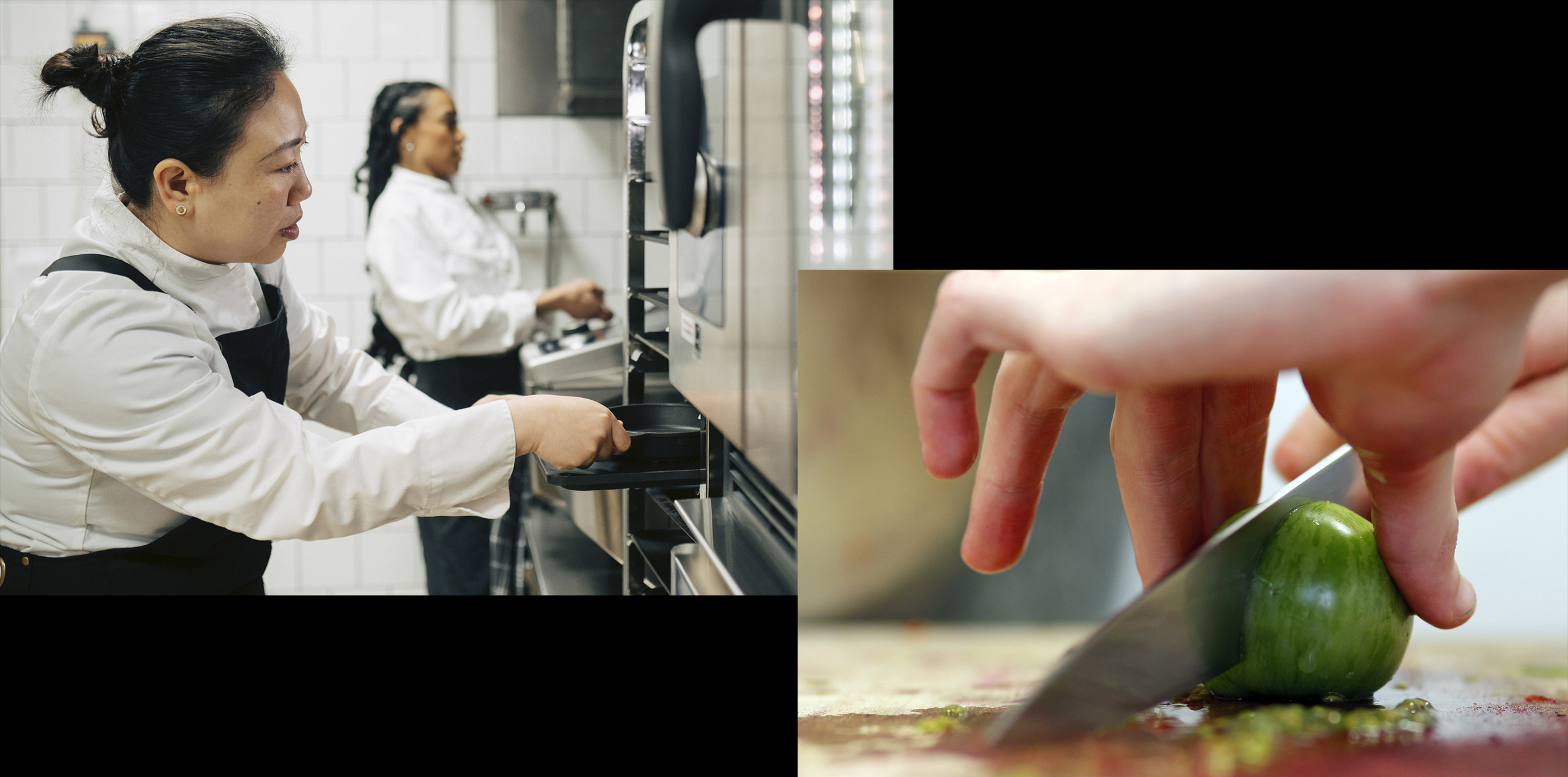
From her restaurant in St. Paul, Minnesota, chef and owner Karyn Tomlinson, an ABIC member, agreed: “I get all the fame and glory being up front, but I arguably have the least important job.”
She opened Myriel in 2021, named after the bishop in Les Misérables who invites downtrodden Jean Valjean to a meal at his table and treats him with dignity despite his turbulent past. That ethos of hospitality animates the restaurant and has carried Chef Tomlinson and her team to top honors, including a James Beard Award.
As her kitchen began to prepare the staff meal ahead of their dinner service, Chef Tomlinson talked about the impact immigrants have had on restaurants throughout the Twin Cities. She described the excitement they bring to their roles, their years of honed skills, and their influence on other staff. “They raised the bar for my expectations of what we should all work like,” she said.
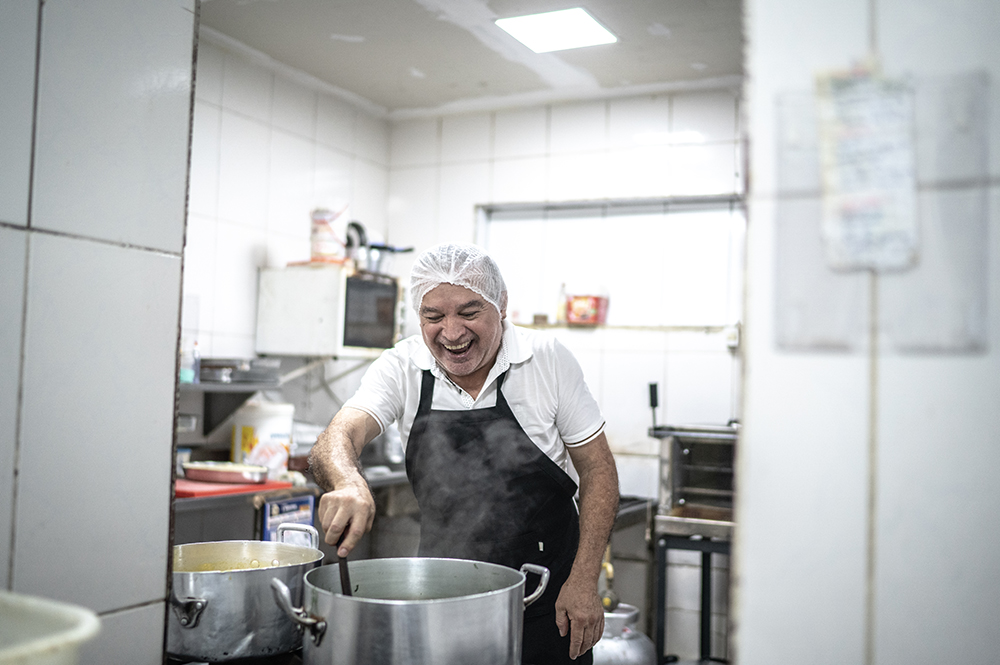
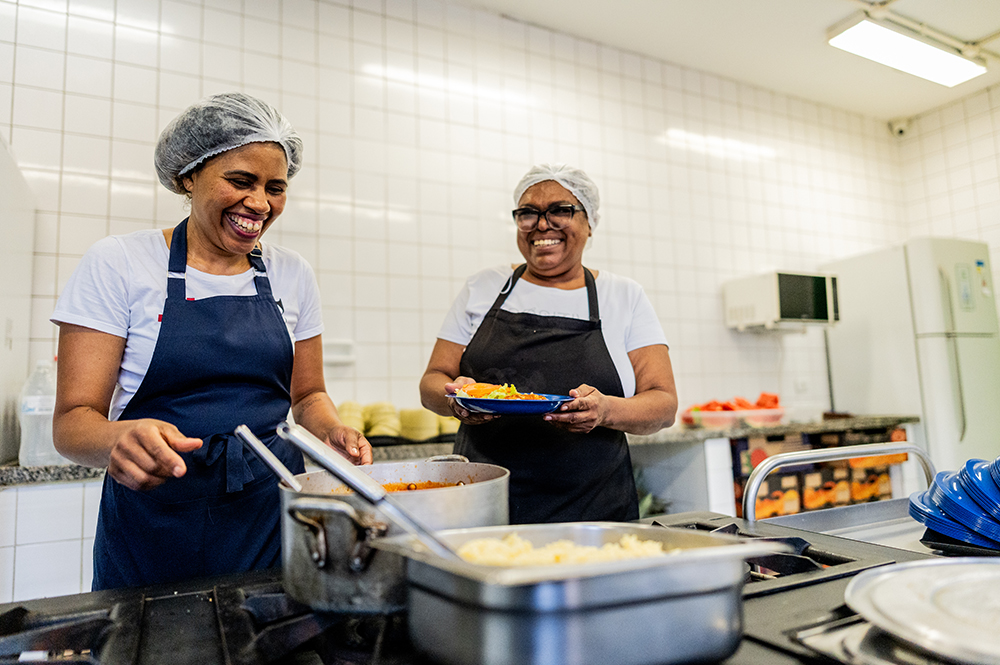
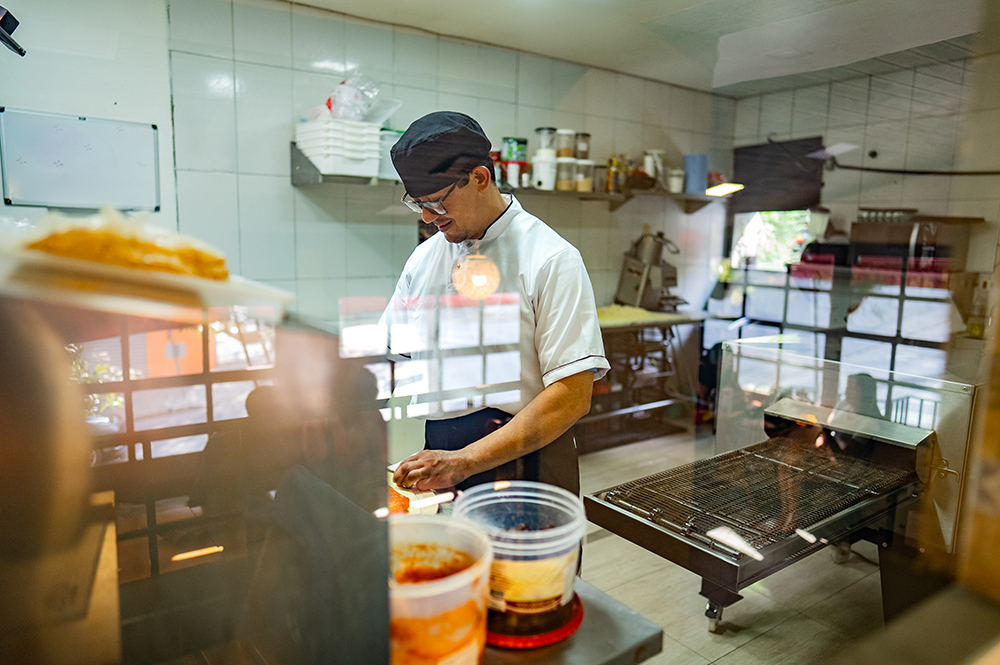
As part of her job, Chef Tomlinson spends a lot of time at local farms and witnesses how immigrant workers are the backbone of our food system, from planting and harvesting crops to packaging and delivering them to restaurants. “You can’t reschedule a harvest, so you need dependable, respected workers,” she said. “When you take those key players out of that picture, it impedes the whole system.”
Once produce arrives in her kitchen, cooks of various cultural backgrounds find expression through the menu, from the Bulgarian-brined feta introduced by her chef de cuisine to the Vietnamese-inspired fish sauce her kitchen makes from catches reeled in from local lakes.
Their impact on the restaurant “is like turning the lights up in a room,” Chef Tomlinson said. And it is only through offering her employees the respect and dignity they deserve that a spirit of hospitality is able to extend from the back of the house to diners in the front.
“If you’re treating each other well as a team, then your guests will see it—when the hospitality is not a performance, but a way of living,” she said. That is a formula not just for supporting staff, but for great service and successful storefronts. “If you want more thriving, good businesses, it needs to start with happy workers.”
The Work That Makes All Other Work Possible

Felicia is the type of nanny who asks the kids she cares for what they would like to have for breakfast every day. “It’s always good to have the kids pick, so it opens up their appetite,” she said.
Born the eldest of six children in the Caribbean, she spent much of her childhood raising her siblings, and knew once she arrived in the United States that she wanted to pursue a career in child care. But for the first several years, her undocumented status meant Felicia (whose name and identifying details have been changed) lived in persistent fear of retaliation. Unaware of her rights, Felicia tended to families who demanded long hours without overtime pay and housekeeping in addition to child care.
Her time as a nanny hit a low while caring for the children of a man in Queens whose unreasonable demands and disrespect for her needs led to a period of overwhelming stress. It bled into her child care; when she took the children in her care to the playground, she kept to herself.

One day in the park, Felicia was approached by a nanny who was a member of the National Domestic Workers Alliance (NDWA), another Ford grantee. The nanny had noticed Felicia didn’t speak to other nannies or organize playdates, and asked if everything was all right. “At that moment, everything poured out,” Felicia said.
After describing her working conditions, the nanny told Felicia about her rights to overtime pay and protection against retaliation. For nine years, Felicia had worked without this information, deprived of the labor protections to which she was entitled. But since that day, everything has changed.
Today, Felicia is happy with her employment: She regained her confidence as a caregiver, left that detrimental work environment, and became an advocate for labor protections herself. “When NDWA gave me resources, I didn’t keep them to myself,” she said.
“Immigrant workers occupy a foundational role in the caregiving landscape,” said Haeyoung Yoon, vice president for policy and advocacy at NDWA, “but they face distinct vulnerabilities because their work is performed in private, intimate settings, often shielded from oversight.”
Additionally, she said, they face cultural stereotypes that devalue their work as “unskilled” or “women’s work,” a prejudice rooted in the historic exclusion of domestic workers from labor law protections. It was not until 2013 that home care workers were given basic guarantees of a federal minimum wage and overtime pay—rights that have been on the books for most workers since 1938.
This is especially ironic given that care work makes all other work possible, as Ai-jen Poo, president of NDWA and Ford Foundation trustee, often states. If care workers are not available and invested, the rest of the workforce suffers and struggles to function. This is something Felicia saw firsthand during the COVID-19 pandemic, when many nannies risked their own health so the doctors and nurses they worked for could attend to the waves of patients falling ill. Some of those nannies, she said, lost their lives.
A Land of Opportunity

The question of immigrant labor in America is simple: Will we protect the people who power every sector of our economy?
When restaurant workers have finished wiping down the kitchen counters, when construction crews have packed up the traffic cones, and when nannies commute home to their own families, will they be able to leave their workplaces with a sense of stability, confident in their rights and knowing their work will be valued and compensated?
The fight for a resilient economy, fair wages, and stable child care is tightly connected to the rights of immigrant workers. That’s why the voices of the hundreds of employers who comprise ABIC’s membership are so crucial.
They understand that doing justice to the skilled, experienced, and dedicated workers they employ means pushing for reform that allows immigrants to contribute to the economy. That includes not just establishing new immigration pathways but enshrining rights that protect immigrant workers from exploitation, wage theft, and retaliation.


For Felicia, learning about such rights was liberating, and it helped her deliver the quality of care that all families crave for their loved ones.
“Today, more nannies know about their rights, but we are still fighting for fair treatment,” she said. “I share my story so all domestic workers, no matter their status, can be acknowledged for the important work they do.”
Chef Tomlinson also sees a deeper reason to enshrine immigrant protections, one that is rooted in America’s identity as a nation. “If we are who we say we are as a country, as a land of opportunity and goodness, we need to live that out on all levels and treat the people who are here well,” she said.
Tomorrow, at every hour of the day, immigrant workers will be back on the job. We must invest in strategies that will help ensure that when they do, they are met with security, dignity, and respect.