
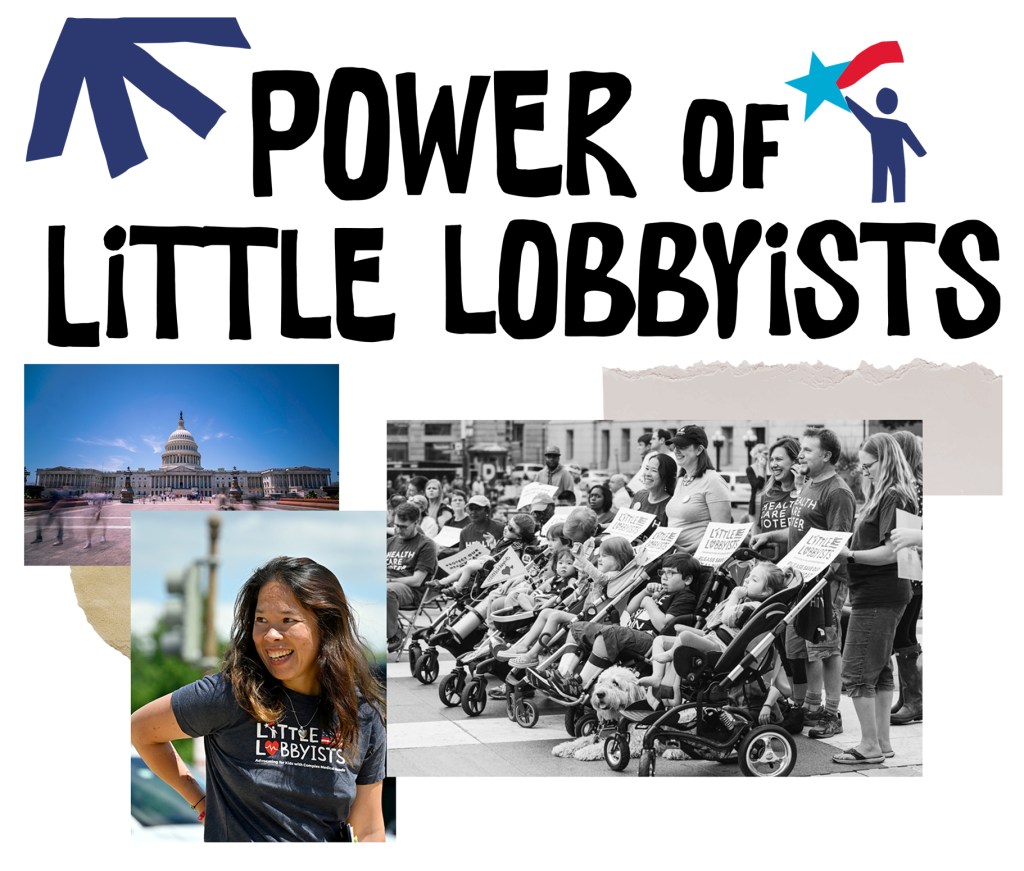
For families with disabled and medically complex children, health insurance can mean the difference between living together or being separated by miles.
It’s a reality Jodi Otbot knows all too well. Her nine-year-old son, Ian, enjoys a full, fun home life with his five siblings; he’s an enthusiastic gamer and a big fan of music, and he gives famously great hugs. Ian also has mitochondrial disease, a progressive condition affecting multiple body systems. He relies on a feeding tube for all nutrition, uses catheters, requires a medical stroller for mobility, and receives in-home, overnight, and school nursing care.

“If you take nursing, feeding supplies, and catheter supplies away, he can’t function. He can’t live, eat, or go to school,” she said. “If we lose access to those life-saving items, that leaves us with really no choice—we’d have to put him in an institution, and there is not one close to us. He’s nine. It’s so hard to think about that, but that’s the reality that we face.”
Otbot got involved with Little Lobbyists, a family-led advocacy organization for medically complex children, in 2025, after years of following their work. Like many families involved with the nonprofit, the Otbots have private insurance—in their case, through Ian’s father’s job with their county in Pennsylvania. However, Ian receives Medicaid through a waiver program, a special Medicaid category designed specifically for medically complex and disabled children that provides coverage beyond standard program eligibility. Medicaid covers Ian’s catheter supplies, feeding supplies, and nursing care, and has filled in crucial gaps after he met his annual private coverage cap.
The financial stakes can feel even higher because the Otbots live in a lower-income county in Pennsylvania where the Medicaid income thresholds are low and easy to cross, with limited waiver program spots available. “I get nervous every year when my husband gets a cost-of-living increase in his paycheck, usually 1% or so,” Otbot said. “I worry that we’re going to hit that threshold and be over income, even though we are a family of eight, and lose our coverage.”
It was a similar sense of urgency that led Elena Hung to cofound Little Lobbyists in 2017. Momentum was building in the United States Congress to repeal the Affordable Care Act (ACA), which would threaten the Medicaid coverage that kept her then-two-and-a-half-year-old daughter, Xiomara, alive. Xiomara is a joyful, funny, and mischievous girl who knows every episode of Bluey by heart. She was born with complex medical needs requiring a tracheostomy, ventilator, feeding tube, and wheelchair, and she spent the first five months of her life in the neonatal intensive care unit. Her care totaled $3 million, and without the ACA’s protections against lifetime insurance limits, she could have lost her coverage before coming home from the hospital.
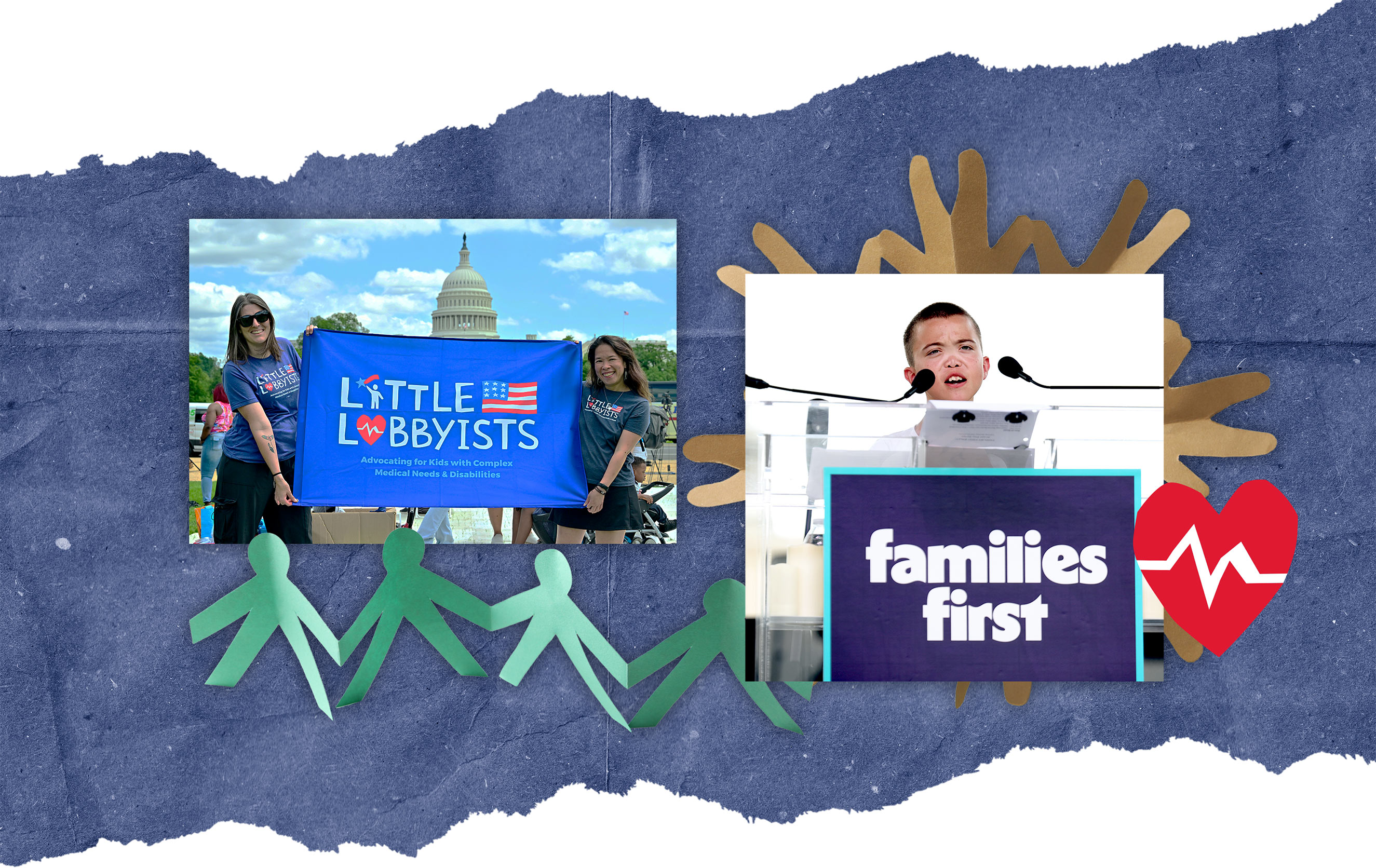
“I accidentally started a nonprofit and have been intentionally building it ever since,” said Hung. Along with cofounder and fellow parent Michelle Morrison, Hung reached out to other families of medically complex children across the country, asking them to share their testimonials about the urgency of ACA and Medicaid benefits for their families, promising to drive the 20 minutes from her home to Washington, D.C., to hand-deliver them to representatives. Within one week, she collected over 100 stories.
The first day Hung brought these stories to Capitol Hill, five families joined her, including parents and their disabled and medically complex children. The group had few appointments scheduled, but congressional leaders quickly noticed the coalition of children using medical equipment in their hallways—and were drawn to them. What became an anticipated few hours of advocacy became days. Nine years later, Little Lobbyists maintains a regular, highly visible presence in Washington, and its strategy endures: bringing children with disabilities and medical complexities directly to policymakers, putting adorable faces to the consequential funding decisions these leaders make about their care.
“We learned early on that the most important thing was to keep coming back to their offices, and coming back,” Hung explained. “We knew if we met someone for 15 minutes, they would forget about us the moment we walked out the door. But when we went back to them, over and over, they got to know our children. It becomes really personal to them.”
The repeated visits also created unexpected moments of connection with congressional staff members. Many were initially concerned when they saw children being fed through tubes during meetings or heard ventilator alarms going off. But soon, it became an education to them. Xiomara taught staffers how to use sign language. “She would end every meeting with the sign for ‘later,’” Hung said. “After that, when we would walk past them, they would sign it to us.”
For the members of Little Lobbyists, the advocacy trips were multifaceted; as parents, including Hung, discussed preserving life-saving ACA and Medicaid benefits with leaders, their children colored in maps with every state where they had met a representative and learned state trivia. They built strong relationships with disability rights and justice groups doing similar education for policymakers, making deep connections and allowing many of the children with disabilities to meet adults with those same conditions who’ve gone to college, have jobs, and have families. Notably, the medically complex children built a strong community with each other. “To this day, my favorite part is when they see each other, they recognize one another immediately,” Hung said. “There’s a really sweet friendship and community that has formed between them.”
When the Otbot family—all eight of them—traveled to Washington, D.C., in July 2025, Otbot’s older children connected with siblings of other medically complex children, forming friendships based on their shared experiences.”They ask me, ‘When are we going to go back? I miss my Little Lobbyist friends,’” she said with a laugh. “That makes me hopeful. These families and kids in Little Lobbyists are out there changing the world, showing what Medicaid does. My older kids know that Medicaid is the reason that Ian is at home and is thriving the way he is, and they’re willing to fight for him to stay with our family.”
Throughout 2025, Little Lobbyists mobilized families nationwide for Capitol Hill visits, interviews, op-eds, and demonstrations, working to stop Medicaid budget cuts. In addition to these efforts, the growing organization also expanded its strategy to include state-level advocacy, developing about 10 active state chapters. They also maintain a substantial, frequently updated blog with testimonials from families with medically complex children.
“This isn’t optional. We will show up because we have to,” Hung said of Little Lobbyists’ continued work. But she emphasized that watching their children thrive and build relationships provides the regular infusion of hope they need.
“A lot of our children were told at one point or another that they were not going to make it, and they’re here,” Hung said. “Yes, we’re working to save and expand health insurance, but also, these kids become instant friends. They will lift up their shirts and show off their feeding tubes, race each other with their walkers and wheelchairs and scooters. They are growing up with disability pride that really didn’t exist before. That, to me, is everything.”

The Ford Foundation supports grantee organizations in accordance with all laws and regulations applicable to 501(c)(3) private foundations.